|
My most recent long film:
Documentary film, 58 minutes.
4K video, stereo sound.
Production: Janiv Oskar / Isle art Productions, 2023.
What kind of films,
videos and radio?
Originally I'm a painter. Then
I took
up photography, performance art and
writing. Then
came theatre & dance. Nowadays I share
my time
with three branches: I write books. I make
visual
art. And I write and direct theatre, opera
and
film. The fourth branch is in a way the
fourth category, but usually my research projects merge into the three
previous categories, so it's not really needed as a separate.
Because of this background some of my
old works belong to the category of video art, or
media art, or performance-to-the-camera. Some
later works are poetry films or essay films or
dance films. And the most recent ones are usually
some kind of documentary films, informed by my
mixed background. My old audiovisual works I made
without any budget, as was typical for video art
in those days. The more recent ones have been made
in collaboration with production companies and
funded by YLE (Finnish state television) or
equivalent entities.
A bit of history
In many of my first audiovisual works I did
painful, silent performance actions in front of
the camera. "No acting, do it for real." Perhaps
because when I was young I was both very anguished
with my own troubles and also very inspired by the
early work of Vito Acconci (1940–),
Dennis Oppenheim (1938–2011), Chris
Burden (1946–2015) and the Viennese
Aktionists.
At some point I wanted to
escape the painful, durational and masochistic
blood-letting and started to make 'soft works'
too: for example just speaking poetry to the
camera. And versioning a few short plays and poems
by Samuel Beckett (1906–1989). I've also
made dance videos and some scratch videos too. I
hope someone still remembers the term 'scratch' in
this context.
However,
perhaps
the
style
I've
used
the
most
is
a
kind
of video essay, where one brings together images,
texts and sounds according to
a philosophical or poetic logic instead of a
narrative one. In
that tradition my favorite work is Agnès Varda's
(1928–2019) The Gleaners and I (Les
glaneurs et la glaneuse, 82 min, 2000). I'd
like everyone to see that work, but I hope many
will also see my works.
The shortest of my films & videos
lasts 2 minutes, the longest 92 minutes. One of
them is a video installation with two channels.
All the others are single channel works and can be
shown also in cinemas, festivals and on
television, not only in exhibitions.
I have also often used fragments of these works in
my theatre and dance works, as projections on
stage.
Distribution
My
recent films are
distributed by the companies that produced the films. The radio works
are distributed mainly by myself and the co-author of them composer Max
Savikangas.
My older films and videos are mainly short works and many of them are distributed by AV-arkki
(the Finnish media art archive and distribution
center) and by myself.
My
profile in AV-arkki's website is quite
informative introduction to my audiovisual works.
My own page here, on my own website, is another.
Some of the info is overlapping, but both sources
can be useful.
I don't want to share my audiovisual
works online for free. I prefer real screenings
and exhibitions and want to keep some kind of
control of my output as well.
However, for preview purposes AV-arkki or me can
provide links and passwords for curators and
festival organizers. |
IHMISEN JÄLKEEN -oopperan radioversio
/ POSTHUMAN, radio version of the opera
95 min, 2023. Commissioned by YLE (Finnish Broadcasting Company),
first broadcast 29.3.2024.
Agricultural Trilogy / Maataloustrilogia:
FARMING CONVERSATIONS / FARMARIKESKUSTELUJA. 27 min 20 s. 2023
ECOLOGICAL BULLETIN / EKOLOGINEN TIETOISKU. 6 min 30 s. 2023
OSTROBOTHNIAN COWS / ETELÄPOHJALAISIA LEHMIÄ. 7 min. 2023
First shown in the Our Common Food exhbition at Lapua Art Museum, Finland, 2023–2024.
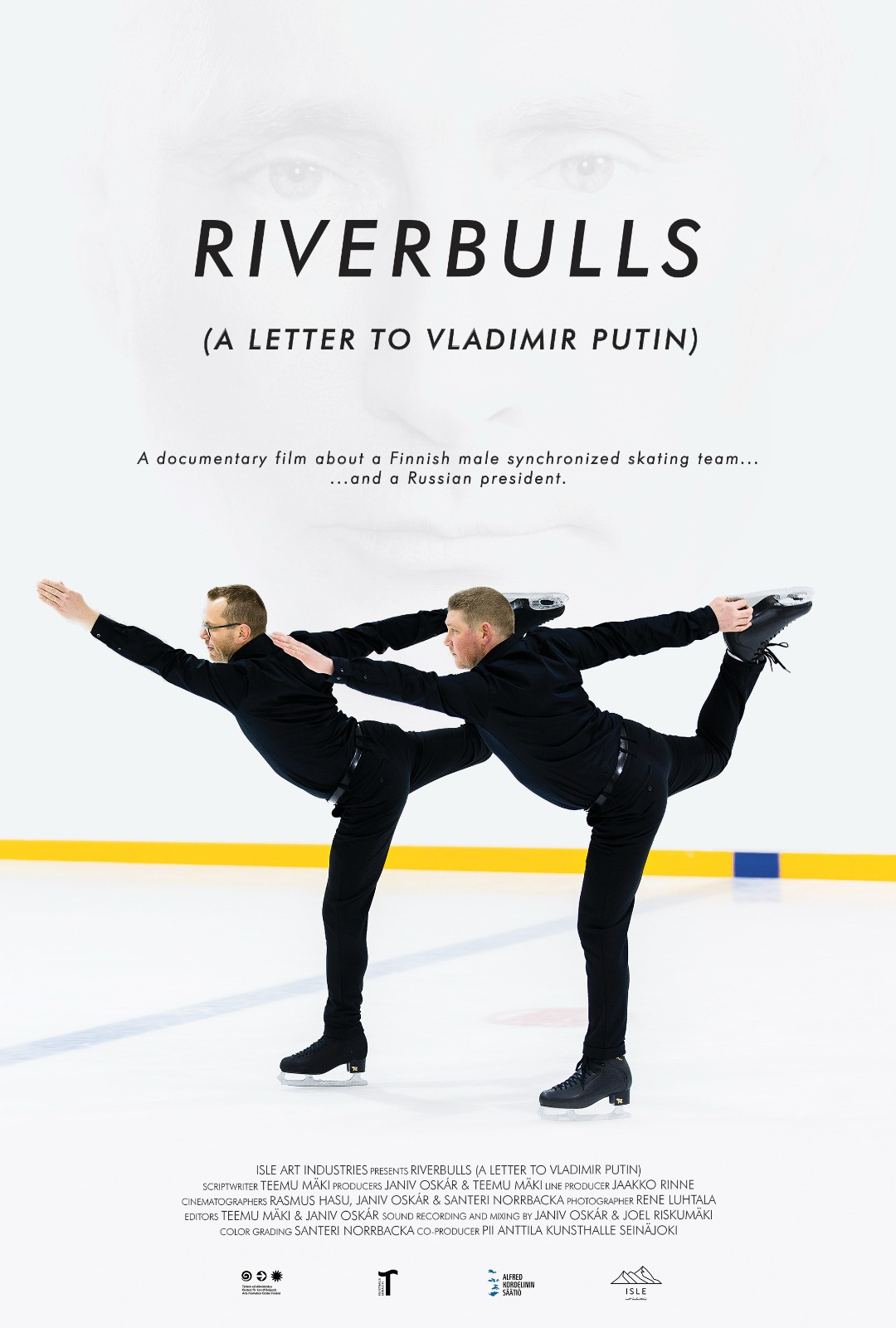
RIVERBULLS — A Letter to Vladimir Putin / RIVERBULLS — kirje Vladimir Putinille
(2023, documentary film, 58 min)
METAMORPHOSEN / METAMORFOOSEJA
16 short films. 2022.
Duration varies from 1 minute to 12 minutes. The duration of the complete set is 80 min.
01 - The Sixth Mass Extinction (Teemu's lecture) / Kuudes joukkosukupuutto (Teemun luento)
02 - You Still Have Time / Jotta ehditte pettyä
03 - Child and Granny Turn into Tree / Lapsesta ja mummasta tulee koivu
04 - Speaking Choir 1: Technology / Puhekuoro 1: Teknologia
05 - Dancing with a Birch Tree / Tanssi koivun kanssa (2017)
06 - Speaking Choir 2: To Encounter Another / Puhekuoro 2: Toisen kohtaaminen
07 - Birch Trees Dancing by the Sea (2022) / Koivut tanssivat meren äärellä (2022)
08 - Speaking Choir 3: The Art of Happiness and Unhappiness / Puhekuoro 3: Onnellisuuden ja onnettomuuden taito
09 - Life Is Given to Man (Yvette's version) / Elämä on ihmiselle annettu (Yvetten versio)
10 - Speaking Choir 4: Birch Knows How to Die / Puhekuoro 4 - Koivu osaa kuolla
11 - Life Is Given to Man (Leila's version) / Elämä on ihmiselle annettu (Leilan versio)
12 - Speaking Choir 5: Pleasure / Puhekuoro 5: Nautinto
13 - It's Snowing Today / Tänään sataa lunta
14 - Speaking Choir 6: How to be Happy / Puhekuoro 6: Miten olla onnellinen?
15 - Maija Dances Like a Birch Tree / Maija tanssii kuin koivu
16 - Morgen! / Huomenna!
First shown in the Rauma Triennial, Rauma Art Museum, 2022.
Dance
Like a Birch Tree / Koivutanssi
(2017–2021, video art
/ dance film, 14 min)
MADNESS
AND CIVILIZATION / HULLUUS
JA YHTEISKUNTA
(2014,
drama documentary film, 56 min)
CRASH
Radiophonic work, commissioned by YLE (Finnish Broadcasting Company)
Max Savikangas (composer) & Teemu Mäki (lyrics). First broadcast 10.9.2014.
Woman
and Meat Industry / Nainen
ja lihateollisuus
(2011,
video art / performance video, 7 min)
Who
Is Who? / Kuka kukin on?
(2006–2010,
poetry video / video art, 2 min)
Why?
/ Mitä varten?
(2009,
poetry video / video art, 6 min)
Mortal
/ Kuolevainen
(2006–2007,
essay film / video art, 51 min)
Kaliki
(2004–2007,
dance film / music video / video art, 5 + 5 + 5 min)
Elevator
Dance 1 & 2 / Hissitanssi 1 & 2
(2003–2004,
dance film / video art, 7 + 7 min)
Itäkeskus
Dancing Tree
(2002–2004,
dance film / video art, 14 min)
People
Appear from Nothing
(2003,
video art / essay film, 30 min)
Love
Flies so High, beyond the Reach of Human Mind
/
Rakkaus liitää ihmismielen tavoittamattomissa
(2003,
poetry video / video art, 6 min)
Rikki (Broken / Sulphur)
(2000,
video installation art, 80 min)
Milk
/ Maito / Mjölk
(1998,
video art / essay film, 9 min)
Come
and Go / Kommer och går
(1998,
short film, 6 min)
As It Is (Family
Values of a couple of murderers, part three, with
Pirjetta Brander)
(1997,
video art, 6 min)
The
Motherhood Itch (Family Values, part two, with Pirjetta
Brander)
(1997,
video art, 14 min)
Schicsallssymphonie
(Family Values, part one, with Pirjetta Brander)
(1997,
video art, 10 min)
The Sacred Dishwater /
Pyhä tiskivesi
(1994–1996,
video art / essay film, 22 min)
My
Way, a Work in Progress
(1988–1995,
video art, 90 min)
In a Dream I
Fucked My Grandmother
(1995,
poetry video / video art, 5 min)
A Poem for Jonah / Runo
Joonalle
(1995,
poetry video / video art, 13 min)
Whore and Exploit
(1995,
video art, 62 min)
Ein
Tod Folgt dem Andern
(1994,
music video / video art, 6 min)
The Shipping Crate (with
Roi Vaara)
(1992,
documentary of a performance tour, 17 min)
Santa-Maria Furiosa (with
Sanna Kekäläinen & Ilkka Sariola)
(1991,
dance film, 52 min)
Joe
(1990,
short film, 24 min)
Tapio
(1990,
video art / music video, 12 min)
Concept
of Happiness
(1990–1991,
poetry video / video art, 3 min)
My
Way (1990)
(1990,
video art, 7 min)
Ohio
Impromptu
(1989–1990,
video art / short film, 12 min)
Anovisio Telerexia (with
Ilkka Sariola)
(1990,
video art / performance video, 6 min)
The Good Friday
(1989,
video art / performance video, 9 min)
Money
to Burn (1989)
(1988,
video art / performance video, 12 min)
Sex and Death
(1988,
video art / performance video, 30 min)
Here below are short introductions to some of the earlier films. For
films made after 2017, click the first links on the list above.
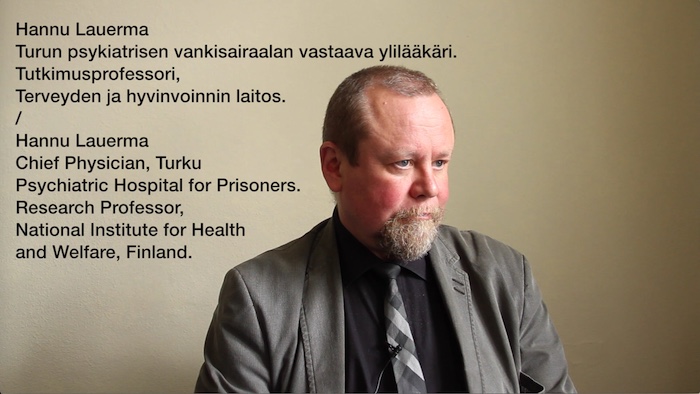
ORDINARY KILLING
/
TAVALLISTA
TAPPAMISTA
Extracts from
an interview with Hannu Lauerma, 17.4.2015.
With music by
Antti Auvinen.
Directed by
Teemu Mäki.
15 minutes, 2016, Full HD
Subtitles:
English & Finnish.
This work is related to Antti Auvinen's opera Autuus
/ Bliss,
which I directed in Helsinki Music Centre in August 2015.
The music of the film is the 3rd Act music from the opera
and most of the video material in the film is also footage
originally shot for and used in the staging of the opera.
(No public
screenings yet, premiere forthcoming.)
MADNESS
AND CIVILIZATION
/
HULLUUS
JA YHTEISKUNTA
Film version of a radio play.
Radio play written by Harri Virtanen.
Radio play directed by Juha-Pekka Hotinen.
The film scripted and directed by Teemu Mäki.
Cinematography and editing by Anton Verho.
Commissioned by YLE Radioteatteri
(Finnish Broadcastin Company) in 2014.
56 minutes, 2014–2015, Full HD
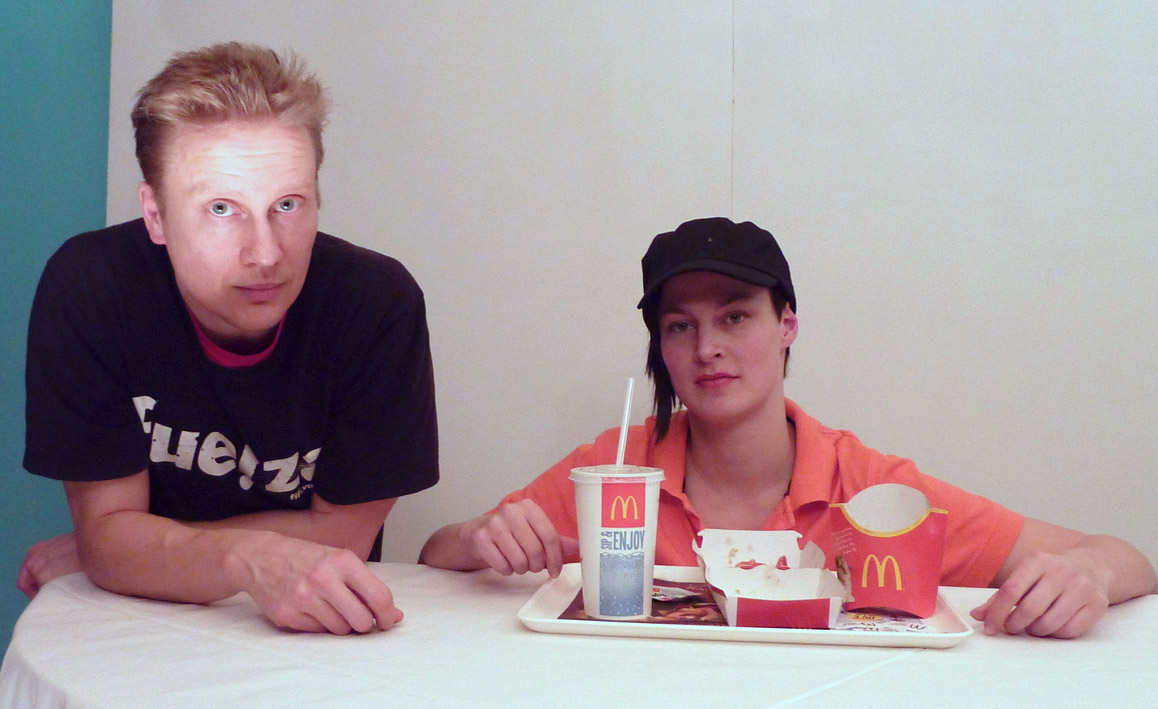
WOMAN AND
MEAT INDUSTRY
by
Helena Kärkkäinen
A video by
Teemu Mäki ("Helena Kärkkäinen").
Originally made for the theatre play
Viha Sydämessä,
directed by Anni Ojanen & Juhan Ulfsak in Teatteri
Jurkka.
However I also meant the video to be also an autonomous work.
Actress/performer: Lotta Lehtikari.
Camera Mikko Kamunen. Edit Mikko Kamunen & Teemu Mäki.
Director Teemu Mäki.
6 min, 30 sec,
2011.
Click on the picture to watch a short sample.
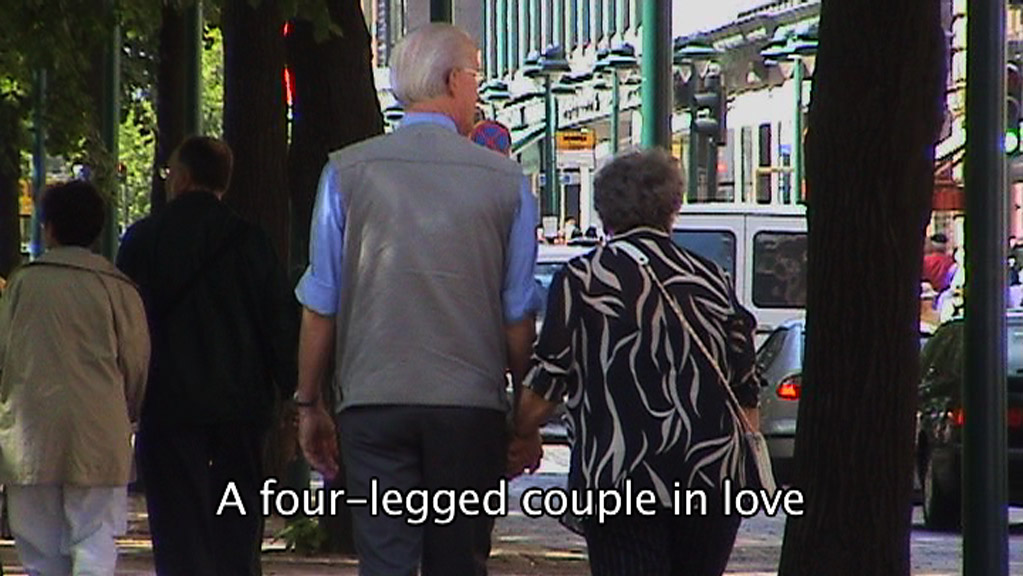
WHO
IS
WHO?
/ KUKA KUKIN ON?
In
collaboration with Aune Kallinen & group of 8 teenagers.
Based on a poem by Väinö
Kirstinä.
1 min, 38 sec,
2006–2010
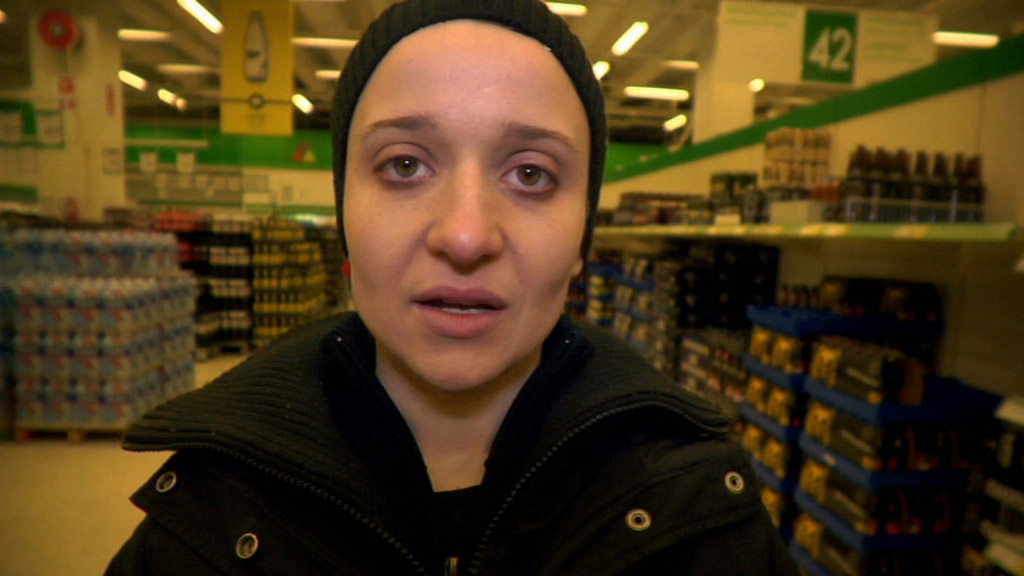
WHY / MITÄ VARTEN?
In
collaboration with Noora Dadu and Mikko Manuel Kamunen.
5 min, 21 sec, 2009
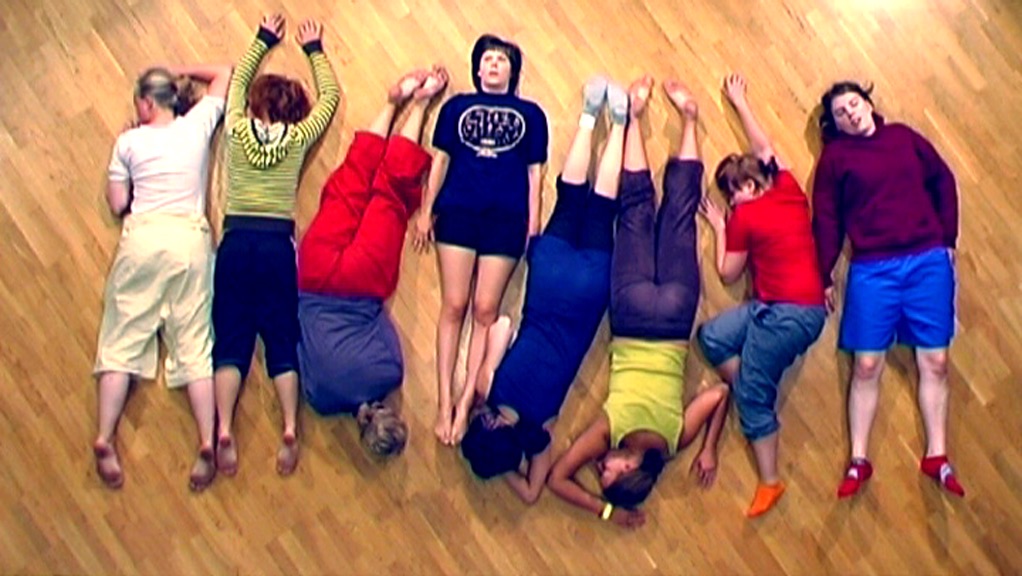
MORTAL
/ KUOLEVAINEN
In
collaboration with Aune
Kallinen and a group of teenagers
52 minutes, 2006–2007
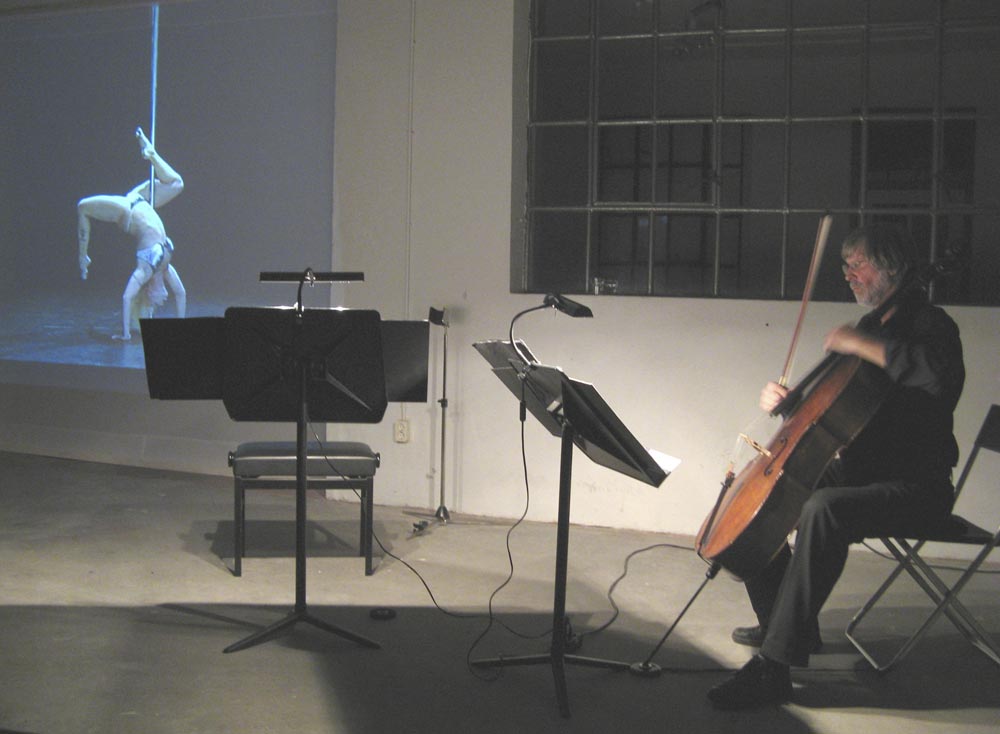
KALIKI
In
collaboration with the composer Max
Savikangas.
Based on his composition Kaliki.
15 minutes, 2004–2007
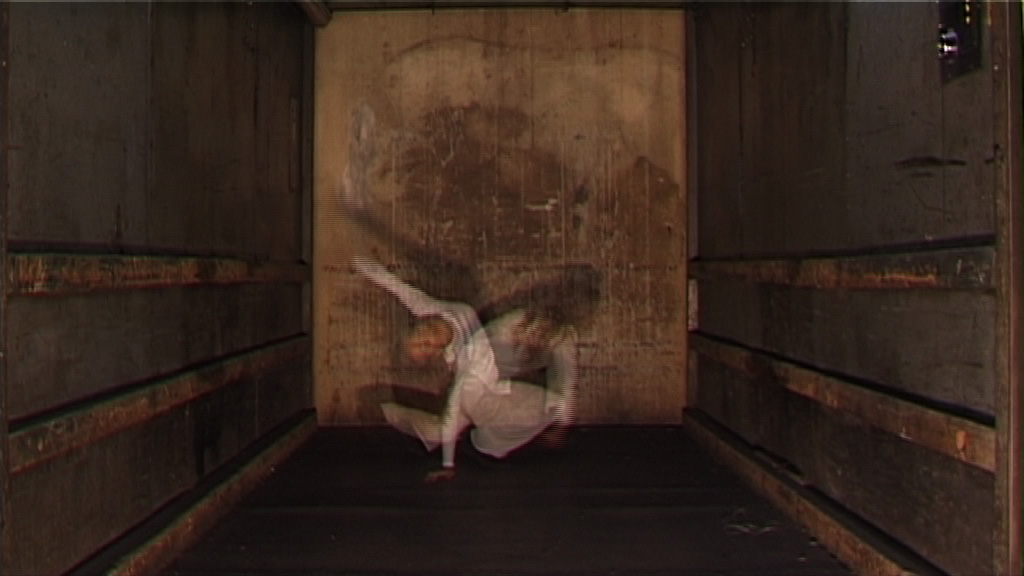
ELEVATOR
DANCE 1 & 2 / HISSITANSSI 1 & 2
In
collaboration with Päivi
Rissanen and Pia Karaspuro.
6´30 minutes each, 2003–2004
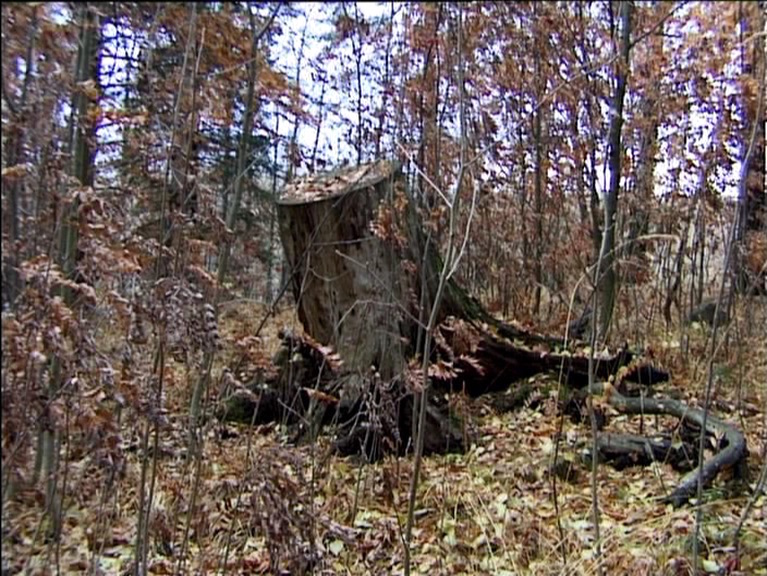
ITÄKESKUS
DANCING TREE
A collaboration
with Pia Karaspuro, Jouko
Kyhälä, Outi
Pulkkinen & Päivi
Rissanen.
13´30 minutes, 2002–2004
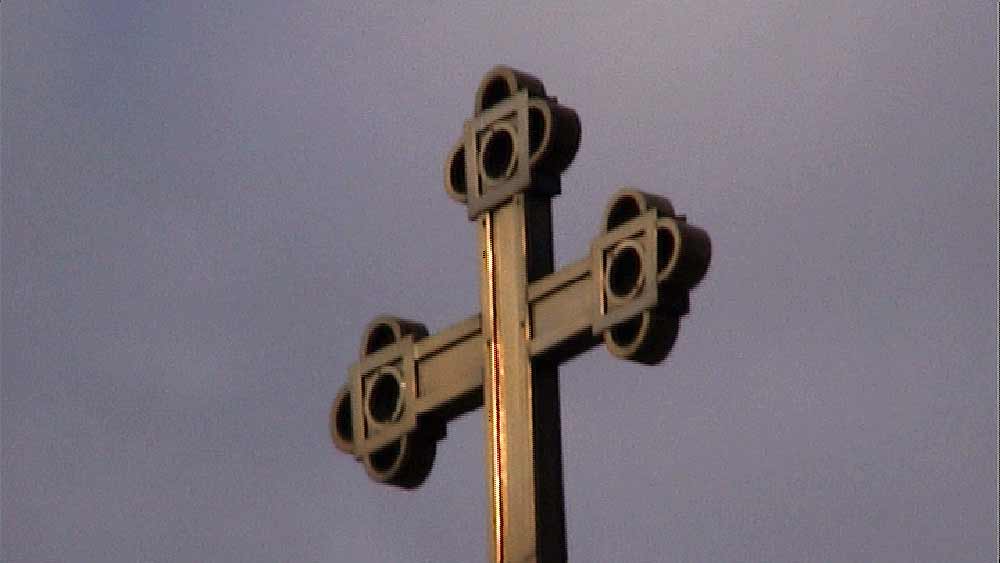
PEOPLE
APPEAR FROM NOTHING
(number one
of The Leningrad Essays and
Poems)
30´20 minutes, 2003
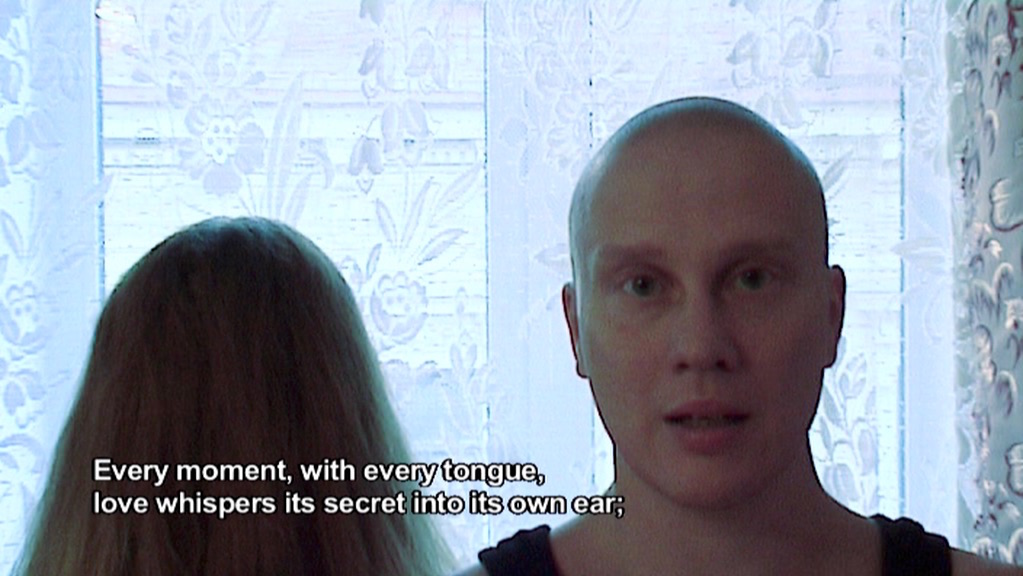
LOVE
FLIES
SO
HIGH,
BEYOND
THE REACH OF HUMAN MIND
(number two of the Leningrad essays and poems)
/
RAKKAUS
LIITÄÄ IHMISMIELEN TAVOITTAMATTOMISSA
(osa kaksi
sarjasta esseitä ja runoja Leningradista)
Finnish/English/Russian
5´33 minutes
2003
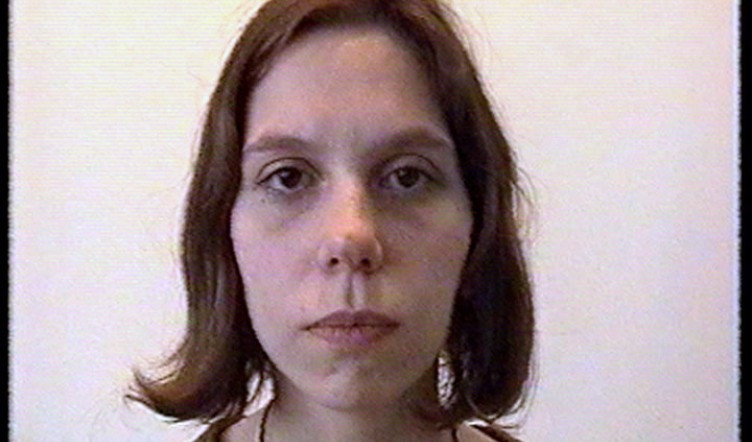
RIKKI (BROKEN/SULPHUR)
A video installation, two tapes & screens, 80
minutes, 2000.
This was first shown in Kari Kenetti's gallery and then later
in my doctoral exhibition at Helsinki Art Hall, 2002.
The work is not available anymore, unless I decide to update
it at some point.
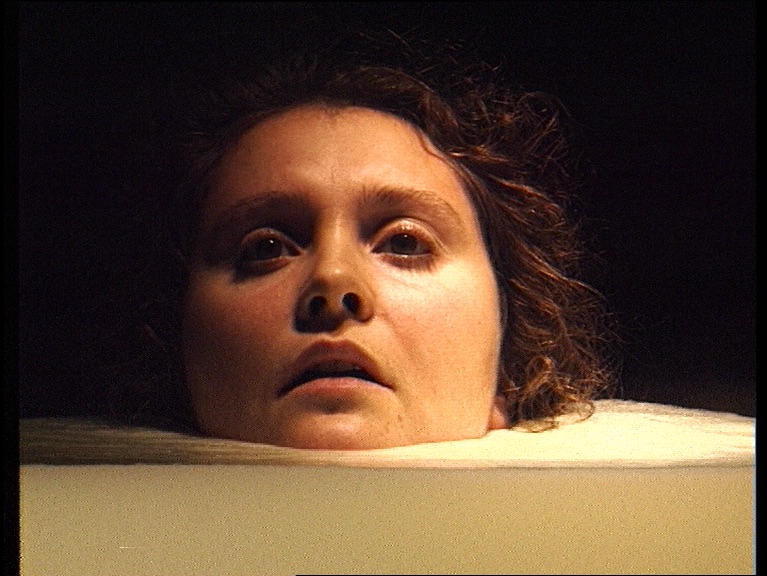
MILK / MAITO
In collaboration with Anja Bargum and Åsa
Wallenius.
9'50 min, swedish version, Mjölk, 9´00 minutes, 1998
"Somebody starves to death
somewhere, somebody else feasts in luxury somewhere
else, what is their relation? If the luxury is there
at the expense of the starved, does it automatically
cause guilt in the mind of the exploiter? If the
feeling of guilt does arise, does the luxury lose its
taste? If the guilt, experience of it, does not arise,
is the exploiter emotionally numb? To be without
guilt, is it to be unable or unwilling to feel in
general? Can one have the guilt, suffer from it, and
yet whenever the time is right just switch to another
mode and willingly enjoy feasting at the expense of
others? Somebody is dying of hunger, on the other side
of the TV-screen, somebody else is feasting, on this
side of the TV-screen, this is a fact. Who is hurt by
this? The one who dies of hunger. The one in slave
labor in a sneaker factory. What about me? Who
benefits from this? The owners of the sneaker factory?
The one who feasts and watches telly. Does the
ice-cream have more intensive taste when on TV there
is something to compare it with, ice-creamlessness? If
on the other side of the screen there was somebody
with chocolate, should I have the most expensive
caviar to still have this luxurious feeling? If
everybody gets caviar, a Mercedes and vacations in
Bermudas, will we some day all of a sudden realize
that a carrot, day care and sauna is enough? Tell that
to the last cupful of rice. If everybody had TV and
chocolate, would the paradise be not only here but
everywhere? Or would at least the desperation be gone?
An unemployed who is more interested in alcohol than
public library, how much happier is he than the
starving one? What do I use to measure the difference?
Am I now getting rather gloomy? Lets get back to the
point. What if I decide that the deprivation of the
majority is not the result of the luxury of the
minority, if the privileged are not feasting at the
expense of the poor, do I still think that the poor
must be helped? Does guilt arise? Does it lead into
action? On whose behalf and against whom? Or do I
choose pity? Maybe also charity? Unless it interferes
with my mortgage payments. Pity and charity, are they
results of the ill feeling that seeing a being like me
starve to death causes? Or are the pity and charity a
result of the wealth? Because of my wealth I can
afford them. Because of my wealth I need them. Why?
I'm standing on top of the mountain of my riches, and
to experience the sweet dizziness of it I have to look
down, and down there in the abyss there must be people
starving to death. The underprivileged must be helped,
do I think so because that's just how it is,
automatically, or because it is in my own interest to
do so, not to be faced with an angry revolt of the
poor later? Is that what I'm afraid of? Or am I afraid
that my indifference at the starving proves my
affection to my child quite shallow, untrue? Does it
that? Shallow, untrue, to whom? To me, to others or to
the child? Can't the commandant of a concentration
camp, in his spare time, be a good father?"
(monologue
spoken in the video)
|
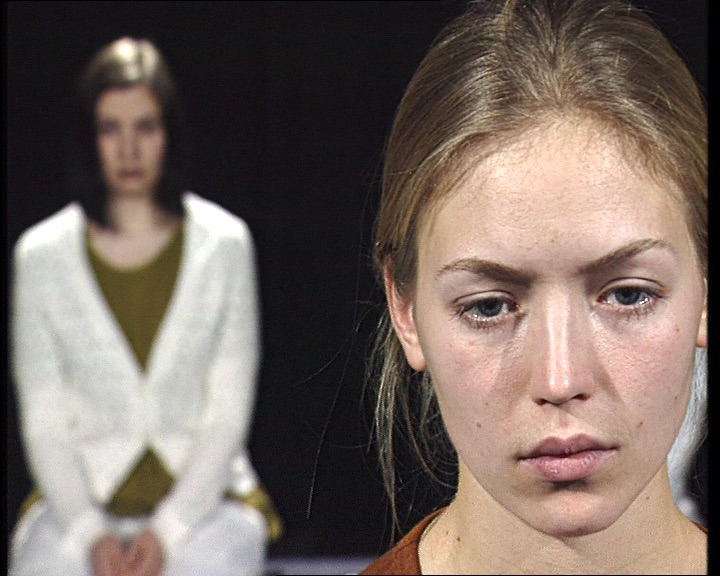
COME
AND GO
A version of Samuel Beckett's short play.
(swedish version Kommer och går), 6´20 min, 1998
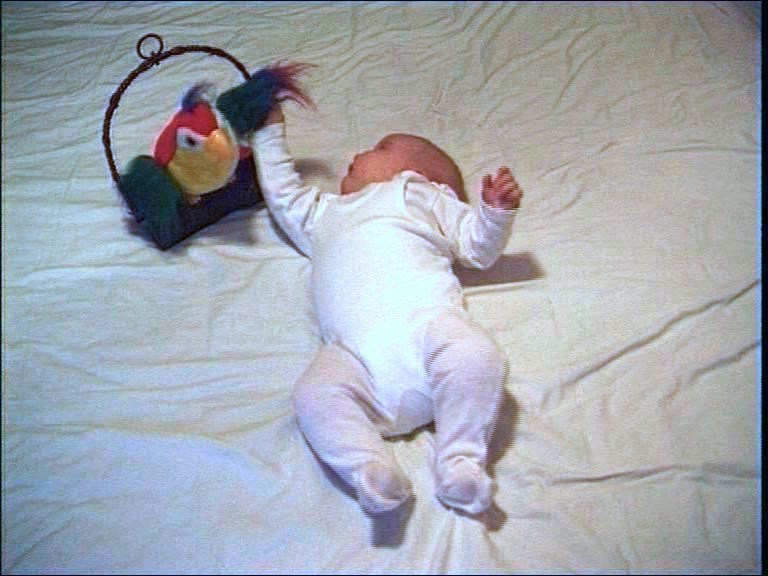
AS IT IS
(FAMILY VALUES OF A COUPLE OF MURDERERS, part three)
in collaboration with Pirjetta
Brander
5´55 min, 1997
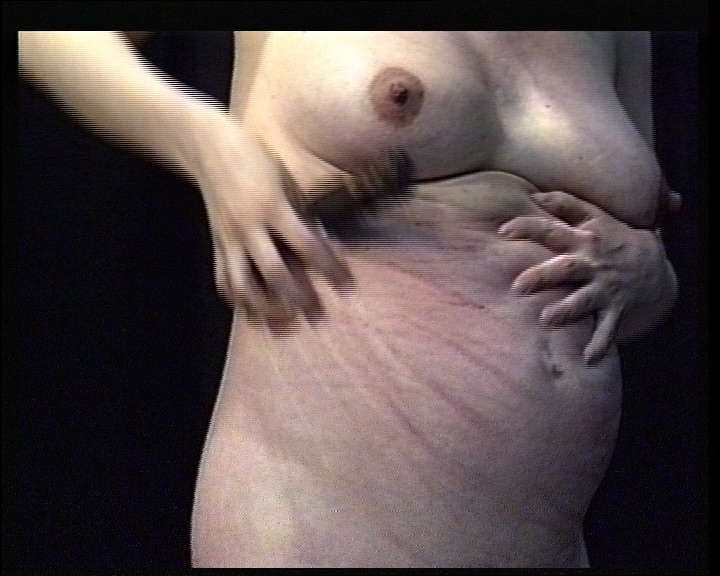
THE
MOTHERHOOD ITCH
(FAMILY VALUES part two)
a collaboration with Pirjetta
Brander
14´00 min, 1997
|
"We worked on the Family
Values 1 + 2 couple months before the birth
of our first child. We used the special changes that
took place in Pirjetta's body, our relationship and
moods, as material with which to ask fundamental
questions like: Why to live, why to give birth, are
children our feeble bridge over the gulf of death,
what are the similarities between making art and
making children? Our daughter, Aino
Ursula Mäki, was born June 15, 1997."
(Teemu
Mäki, 1997)
"I studied the myths connected
to pregnancy and motherhood, which were totally
alien to me. The physical transformations of the
female body during the pregnancy were difficult for
me to accept, these works are, among other things,
about coming to terms with them. The birth of a
child of our own raised many questions about
identity and also answered some."
(Pirjetta
Brander, 1997)
|
SCHICKSALLSSYMPHONIE
(FAMILY VALUES part one)
in
collaboration with Pirjetta
Brander
10´04 min, 1997
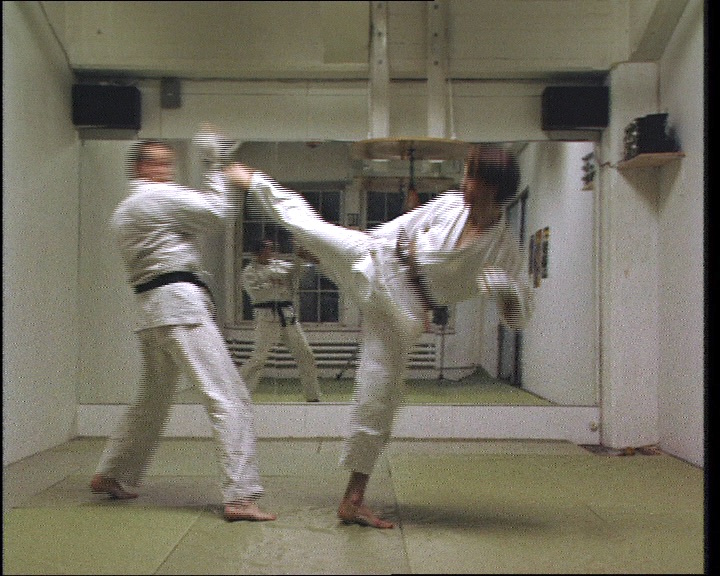
THE SACRED DISHWATER
/
PYHÄ TISKIVESI
21'40 minutes, 1994-1996, for YLE
(the Finnish National Broadcasting Company)
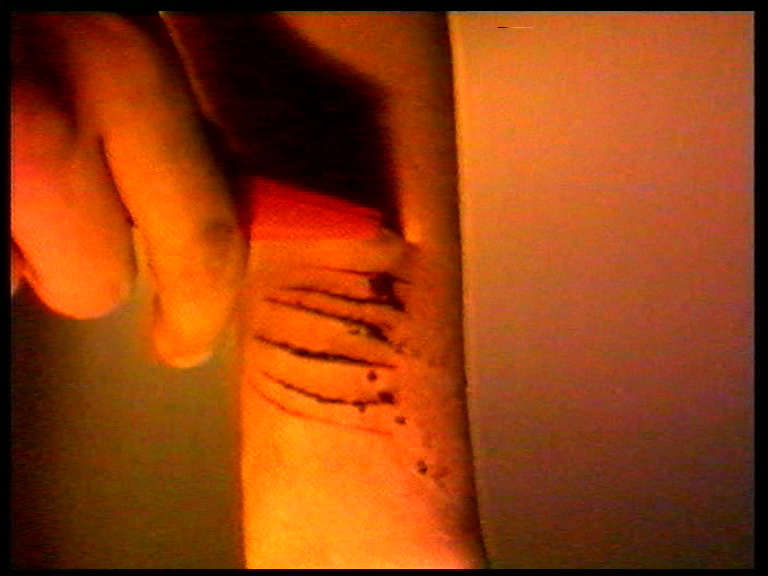
MY WAY, A WORK IN PROGRESS
90'19 minutes (11. version)
1988–1995–
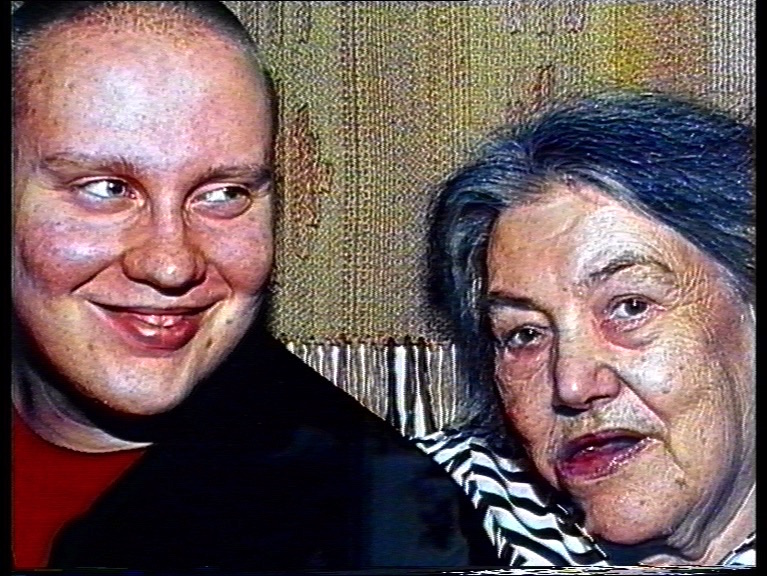
IN A DREAM I FUCKED MY GRANDMOTHER
(a love letter)
4'30 minutes, 1995
a video poem. The text is here: In a Dream
I Fucked My Grandmother
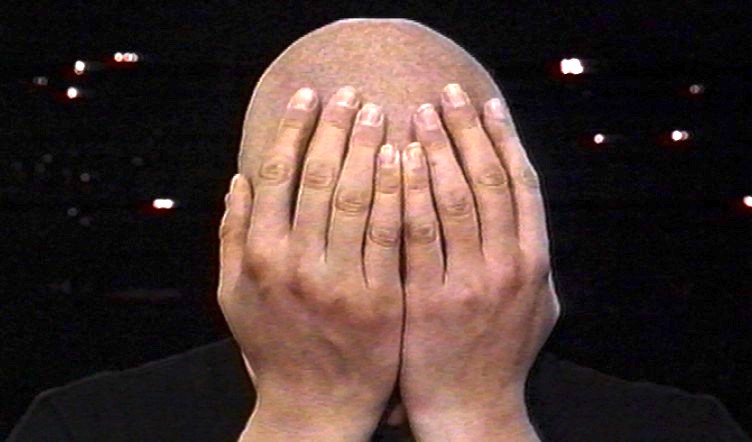
A POEM FOR JONAH
/
RUNO JOONALLE
13'00 minutes, 1995
A video poem, text of which is here: A
Poem for Jonah / Runo
Joonalle.
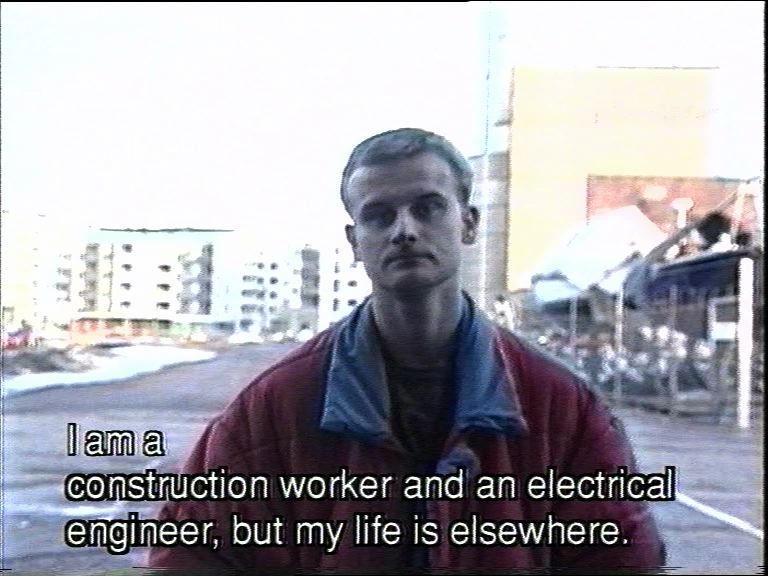
WHORE AND EXPLOIT
a work in progress, 3. version, 62'20 minutes, 1995
"...is a COMEDY in four
chapters, full of excitement, fear, logic,
cruelty, insanity, splendor and gentle beauty,
like fairy tales that one tells to one's children,
so that they would live till death, and not be
killed by boredom before it, with the exception
that this is a tale I told to myself."
(an adaptation of R.W. Fassbinder's
(1945–1982) prologue to his film, Die
Dritte
Generation)
Whore and Exploit is about whoredom,
about ways in which it is possible to find one's
life worth living in a society where everything
has a price-tag on it and almost all jobs are
forms of prostitution.
Whore and Exploit is also about Athens,
ethics, pragmatism, minimalism, humor and about
the concept of brotherhood. This is the third
version. The length of it was limited by U-matic
cassette's maximum playing time, which was good: I
was able to leave the piece to rest for a while. I
will continue the work later, what I have here is
a sort of skeleton and foundation, on top of which
a more elaborate thing will be built. But, this
being a work permanently in progress, I like to
show it at this stage too, it's designed so that
it's justifiable to do so.
My growing infatuation with the "work
in progress"-form is based on my belief that with
this open form it is possible to reach further,
than when striving after the ideal of the
faultless form of the "finished product". "A work
in progress" as a method results in pieces that
admittedly wobble, lose their composure, but it is
precisely through this stuttering flow that I can
accidentally express more than in my earlier,
formally tight and polished works, like The Good Friday. Also I think
that the polyphony of means that I'm developing;
using very different techniques and modes of
expression in a single piece, like in here,
automatically results in a more fragmentary
approach; that of a work permanently in progress.
Another factor contributing to my infatuation with
this approach is my ridiculously sincere,
megalomaniac, attitude towards making works: I
refuse to start another piece if it is not
absolutely necessary. I believe more can be
achieved when building on and constantly refining
what one has made before. This attitude is
comparable, if I may say so, to the approach of my
true hero, Cecil
Taylor (1932–), who has during the last
20 years been playing with the same signature
themes, attacks, and combinations of instruments,
still finding and organically stumbling into new
things inside his own playground, which results in
music, that not in spite of repetition involved in
making it but perhaps because of it, is fresh
every time it's heard.
This work was started at a low point
of my life. That is where its indifference towards
time, its slowness and insistence comes from: it
is an attempt to find something, anything, that
would still be of any interest to me, it just so
happened that this something was in the most
dismal and mundane details of life, like dishwater
(in my own iconography I refer to this work as the
Dishwater
Symphony).
Whore and Exploit is dedicated to Kathy
Acker (1947–1997), because of its
content, but its formal approach owes more not
only to Cecil Taylor, but in my mind, because of
its atmosphere, to Morton
Feldman (1926–1987) and Maria
de Alvear, so in a way it is a tribute to
them too. I also wish to thank Juha-Pekka
Hotinen (1957–) for his inspiring
ideas about the importance of the "zero-intensity"
as a method in art-making.
This work is chapter 5 in the ongoing
series of film and video works titled Films
for Nothing (after Samuel Beckett's prose
work Texts for
nothing). All these works are independent
works, but together they are supposed to really
resonate and make sense, emotionally too."
(the original info leaflet from 1995)
|
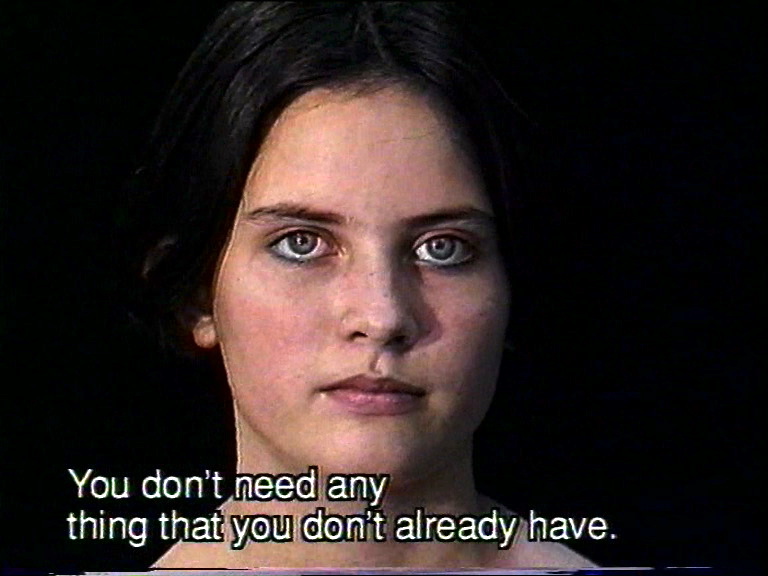
EIN TOD FOLGT DEM ANDERN
unfinished, exists as
a piece of music only, 6'03 minutes, 1994–
THE SHIPPING CRATE
in collaboration with Roi
Vaara,
from his performance tour, 17'00 minutes, 1992
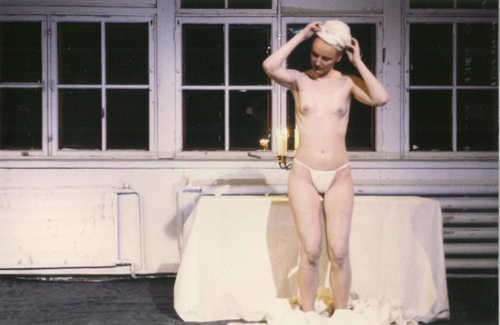
SANTA-MARIA FURIOSA
Video of a dance solo by Sanna
Kekäläinen.
Shot on video with Ilkka Sariola, 52'00 minutes, 1991.
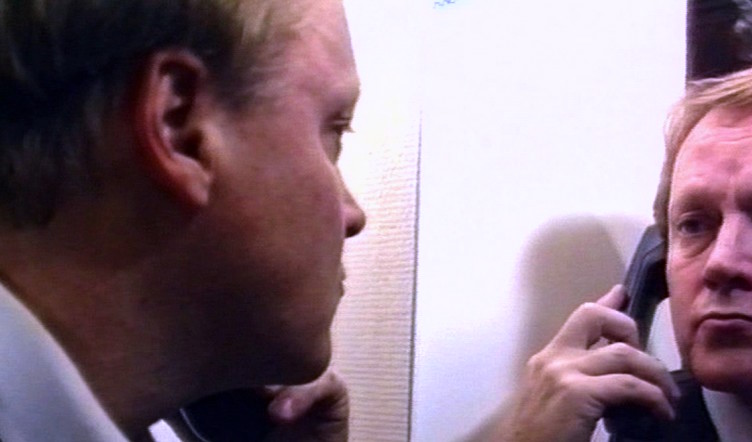
JOE
24'12 minutes
1990
|
Joe is my adaptation of Samuel
Beckett's Eh, Joe. Beckett wrote the piece
(April–May 1965) for Jack
McGowran who played Joe in the first
televised version (BBC2, 4 July 1966). My video
differs significantly from Beckett's script, but
again I want to remark that my intention has been to
be as faithful as possible to the content of
the original text. Cast: Mattijuhani
Koponen (Joe), Penny
Tuerk (the Voice).
|
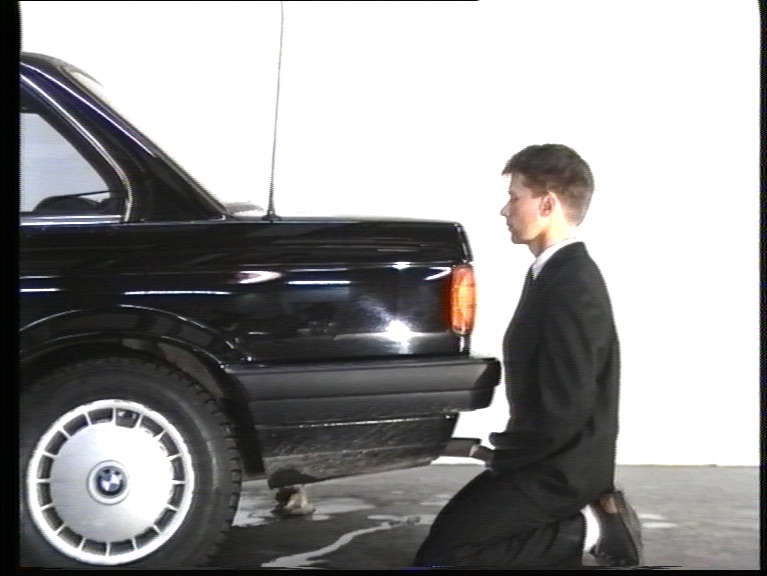
TAPIO
11'20 minutes, 1990
"Originally
TAPIO
was
a
music
video
to
a
song
by
one
of
the
best rock-bands in the world, Radiopuhelimet.
As I was trying to find a form that would make
what I've understood to be the ambiguous content
of the song accessible, I was forced to lengthen
the piece more and more so that eventually the
actual song covers only one fourth of the length
of this video. TAPIO is, like my works very often
are, about the only real and important problems of
this Western civilization of ours. It's now 1993
and all that we need to do is to find solutions to
these problems or at lest a way to live with them:
1.
The capitalist has lost the connection
between his mind and his body. Property is your
substitute for body. To preserve this illusory
body you keep it growing, forcing it to imitate
organic beings. By consumerism you safeguard
yourself from physical pain and at the same time
make up for it by punishing your surrogate body
for its non sentience. Trying to wake it up.
Imitating interaction of mind and body. Useless
exorcism.
2.
What after orgy? What to do when you
realize that you don't need any thing that you
don't already have, that there is no reason to
believe in any kind of correlation between the
accumulation of your property and your mental
well-being.
3.
What to do when you can no longer put
your faith in the future, when you can no longer
perceive the history of mankind as an evolutionary
process towards a "better", "happier" and wiser
society and consciousness. What to do when you can
no longer take seriously any notion of god or
gods, when you can only laugh at the impossible
idea of you having an afterlife or even eternity
to live as yourself with your present set of
brains, ideas, emotions, instead dying; turning
into a recycled bunch of chemicals and minerals.
What to do when you can not seek comfort or the
last resort in the idea of being a part of a whole
greater than you are and dearer to you than
yourself, when mankind is no more seen as the
pinnacle and crown of evolution but just one
species among others that come and go. Most
definitely go. What to do when you can't even
"altruistically" dedicate yourself to the
preservation of life on earth, to saving the
bunnies and flowers from the exterminating man.
"Why can't I?", you ask - because now while you've
reached the pinnacle of almost autistic egoism,
you have at the same lost your belief in any kind
of universal hierarchy of values, now everything
is just a matter of attitudes, anything can be
anything else depending on the viewpoint you
choose. And more concretely; nothing is above
anything else in the big picture. A man, a
Cadillac, a rat, an idea, an HIV-virus, all things
are equal if you have the proper perspective, that
of mother Nature. When your dreams turn to shit
just pass them on to your children, yes you can
still do that but it doesn't give you the kind of
relief it used to.
TAPIO is about the end of western
civilization, and about conforming myself to it."
(original
info leaflet from 1991)
|
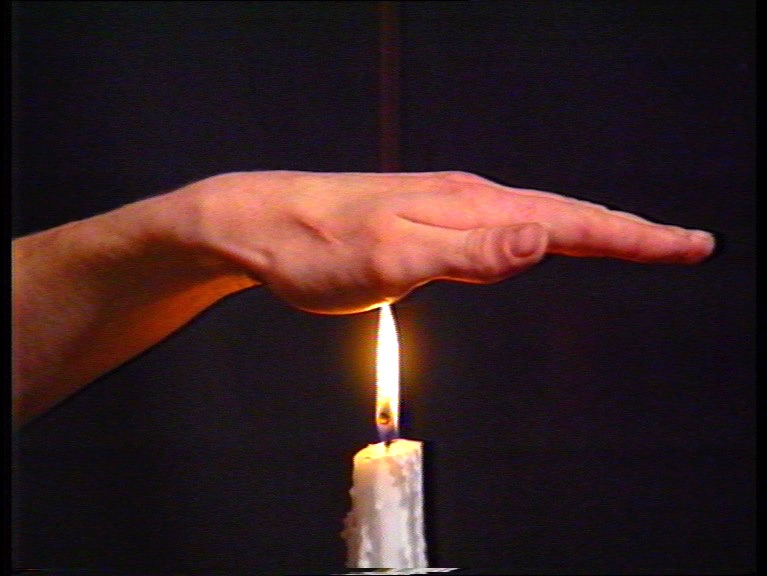
CONCEPT OF HAPPINESS
2'30 minutes
1990-1991
Based on Samuel Beckett's poem My
Way Is in the Sand Flowing.
MY WAY
7'15 minutes, 1990.
Not shown anymore, replaced by the long work, My Way, a
Work in Progress.
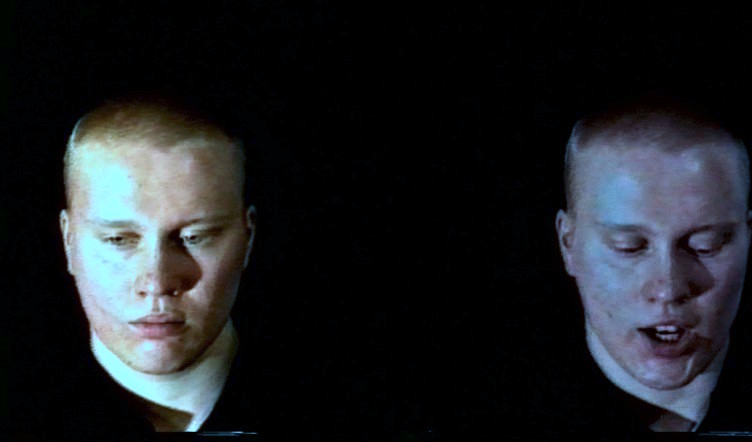
OHIO IMPROMPTU
(4. version) 12'00 minutes, 1989–1990
This
is in a way an ongoing production for I have made four
versions of the piece and I'll make more. These
slightly different readings shall all be saved.
Currently distributed is version number four. Ohio Impromptu is a video adaptation
of Samuel Beckett's play Ohio
Impromptu. Video version retains the original
text as a whole but the setting, actor's appearance
and moves have been altered to some extent in
order to be as faithful as possible to the content
of the original.
|
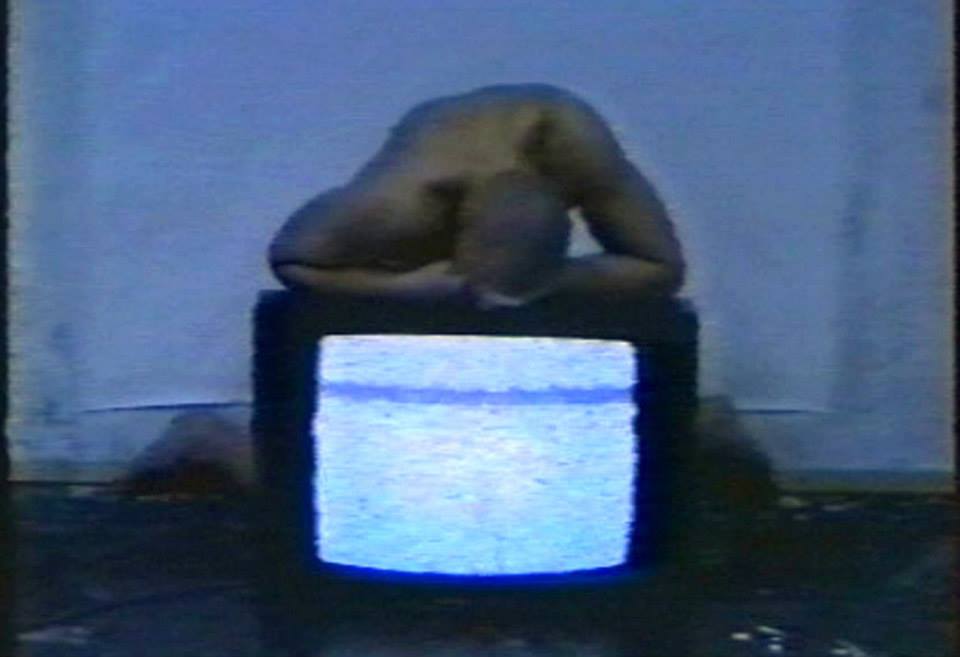
ANOVISIO TELEREXIA
A collaboration with Ilkka
Sariola.
Actually, it's his work, his private performance.
I just gave some advice & helped in the making of the
video version of it.
5'30 minutes, 1990
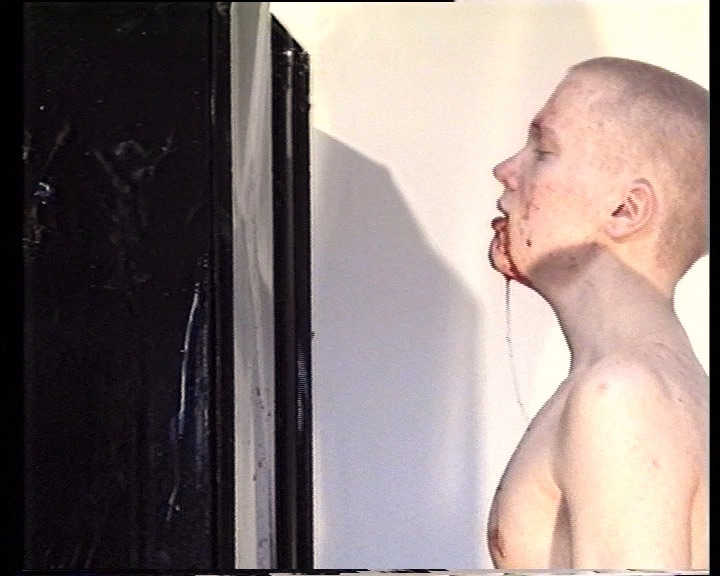
THE GOOD FRIDAY
9'10 minutes, 1989
"The main theme in The
Good Friday is the relationship between
christian faith and fascism, that is, between
masochistic humanism and sadism. Fascism is an
inevitable product of Christianity. Here my
reasoning is very near to that of Wilhelm Reich's in
his book Die
Massenpsychologie des Faschismus. The
Good Friday is a realization of the fact
that masochism (=inverted sadism) is the last straw
both for the starving, exploited and oppressed and
for those who are drowning into the comfortable
numbness of western middle- and upper-class culture.
Western civilization is a symbiosis of
humanism and sadism, the underdog masturbates with
the idea of heaven and with the illusion of being
¨good¨, ¨wronged¨ and ¨morally superior to his
oppressor¨. Those in power have always
cherished Christianity for this very reason. There
is also an interesting contradiction between the
orgasmic masochism of Jesus Christ and modern
humanism, humanism that has based it's concept of
happiness on denial of pain. Western societies have
accepted as a truism that abolishing pain and
striving after more and more comfortable society
will result in shared happiness. I am opposed to
that. I can only laugh while watching your culture
committing suicide with the "eternal" growth of
consumption, growth that gives the impression of
progress even though the proportions of class
inequity must remain the same, because: To
feel rich you need the poor and to be good you
need the evil. The
Good Friday is an edited documentary of a
ritual during which I meditated on what is said
above, took it in and identified myself with Jesus.
I invite the pain and the pain invites me to
resurrect. Finally, I need to point out that what I
say in my opinion in no way "explains" my work. I
believe that works of art are independent and after
finishing a piece its author becomes just a member
of its audience. The very justification of art's
existence lies in its verbally unexplainable nature:
art can not be translated into rational, verbal and
logical language, into the language of the
consciousness. This is why I never talk about my
works. Instead, I expect my works to express
themselves. However, I am occasionally, like above,
when asked, willing to tell about the ideas I have
in my consciousness, my thinking and ideology in
general. This I do because sometimes people who have
great troubles in getting a real contact with my
children (=my works) find it helpful to know
something about their father or maybe about the
landscape where they grew in."
(from the orginal info leaflet
in 1989)
|
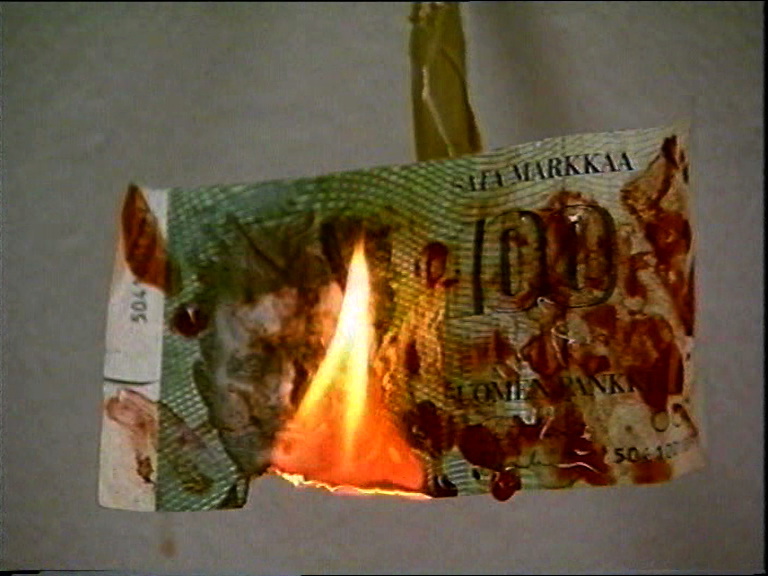
MONEY TO BURN
12'00 minutes, 1989
| This is the second of the two works I
don't show anymore. Sex and Death is the
other one. The reason is simply that I reused all the
good bits of these later in My Way, a Work in
Progress. However, they are available for
scholars if they want to track the roots of my stuff
or my early developments:) |
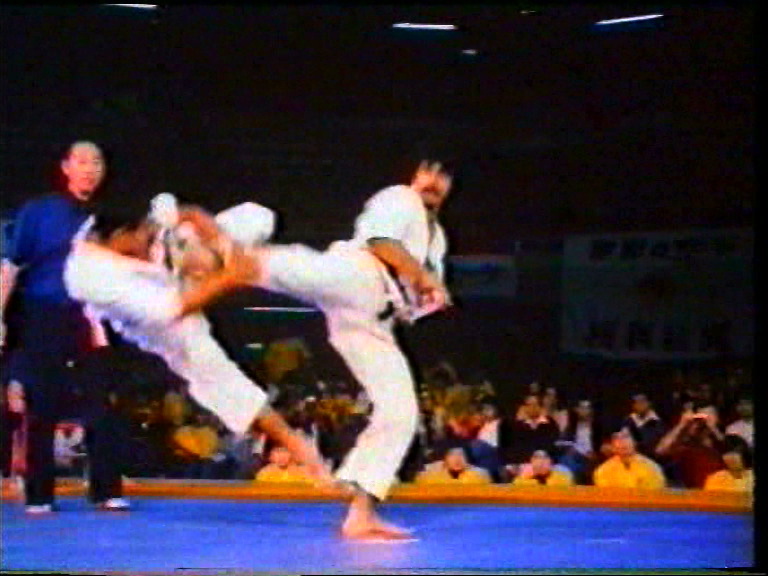
SEX AND DEATH
30'00 minutes, 1988
My first video work. This and several
other early works I made while studying painting in
the Academy of Fine Arts in Helsinki. With video and
film I'm self-taught: I didn't take any courses in it,
I just broke into the video editing facilities and
learned how to use the equipment on my own. U-Matic
analog tape was the pro standard back then:) Sex
and Death was a very crude first step. I don't
show it any more, because I used all of its good
material again in My Way, a Work in Progress, many
years later.
|
There are also many video
recordings of my lectures or of discussions I've
participated. Links
to some of those are on the TEXT
page (as they are closer to texts than video).
|
|