CHECHNYA (in Putinist Russia)

TŠET
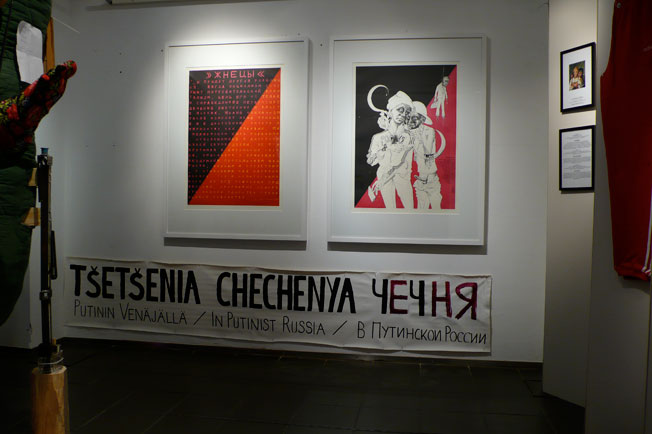
Š̌ENIA (Putinin Venäjällä)          ЧЕЧНЯ (В Путинскои России)
 
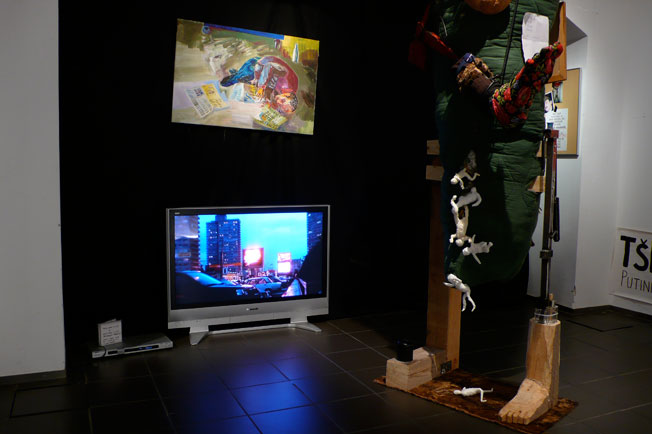
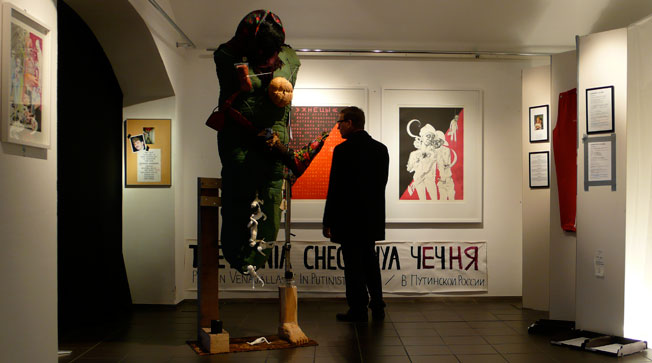
an installation (2008–2010–) by TEEMU MÄKI

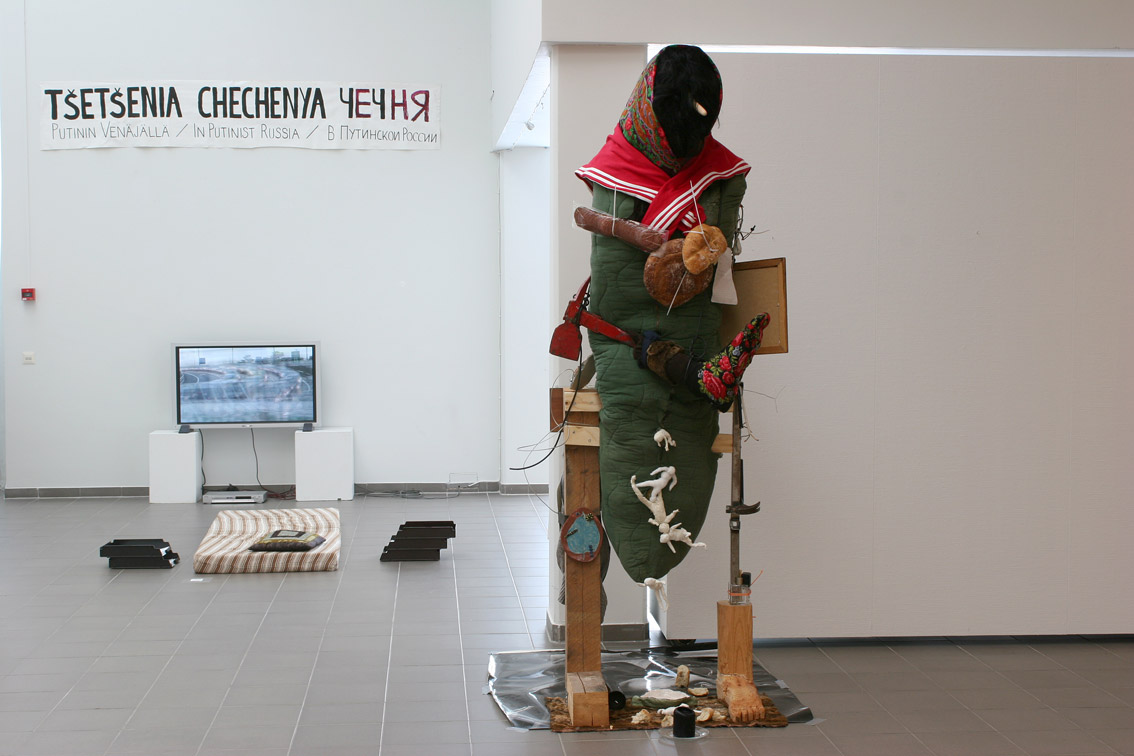
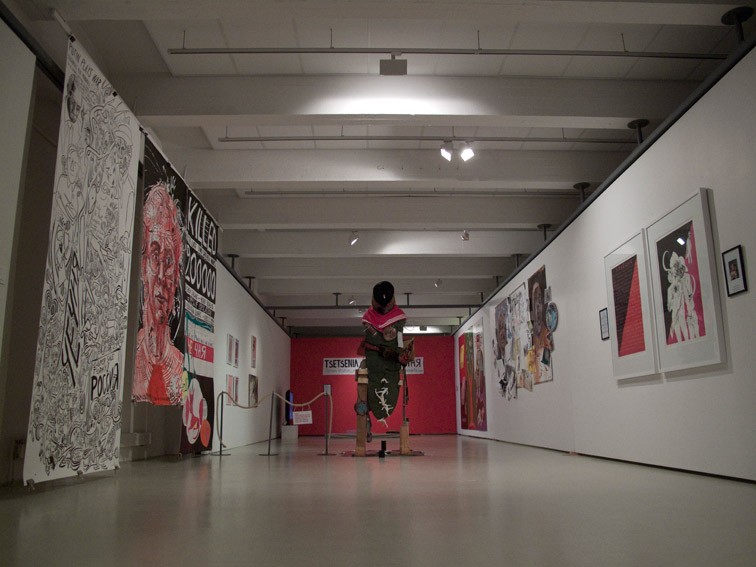
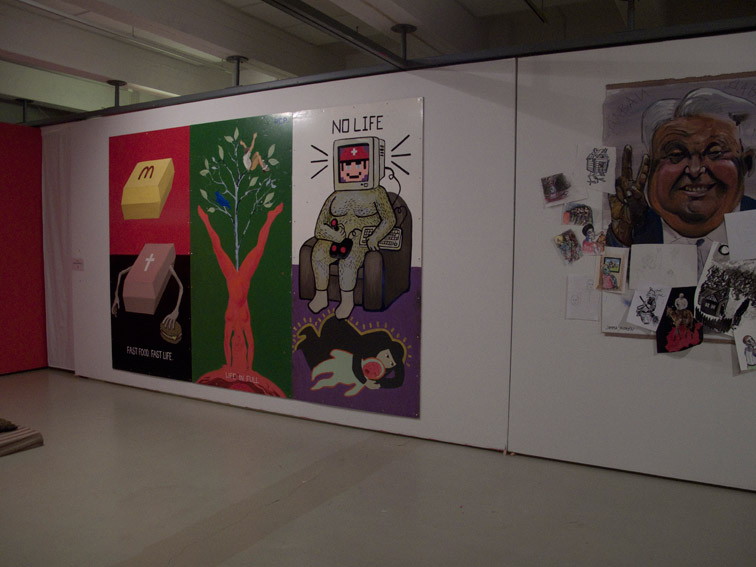
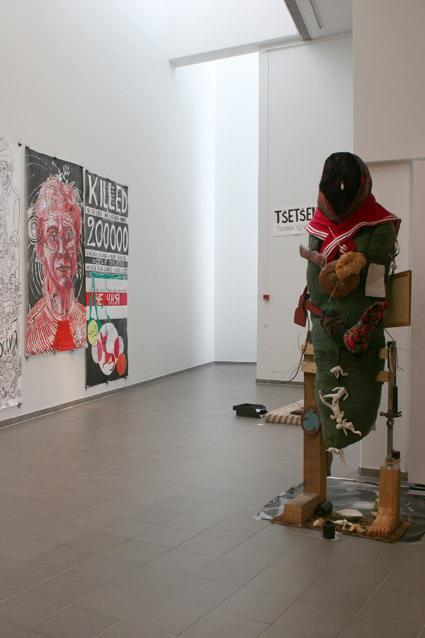
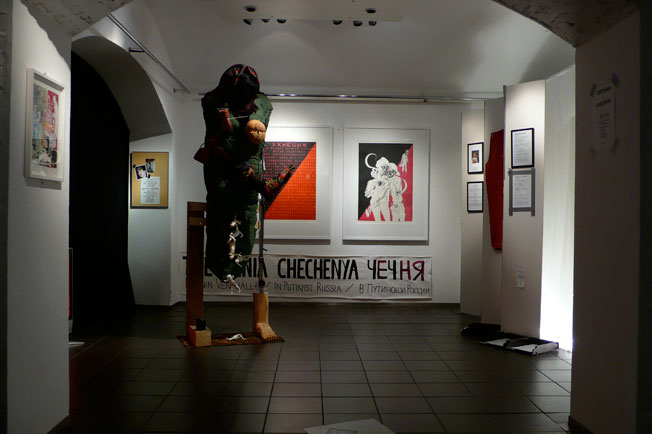
overview 1

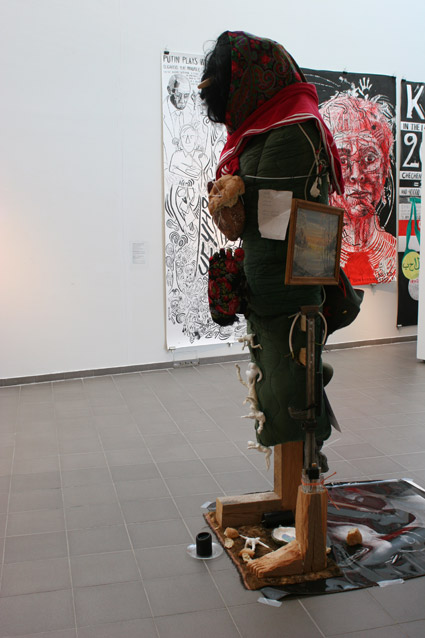
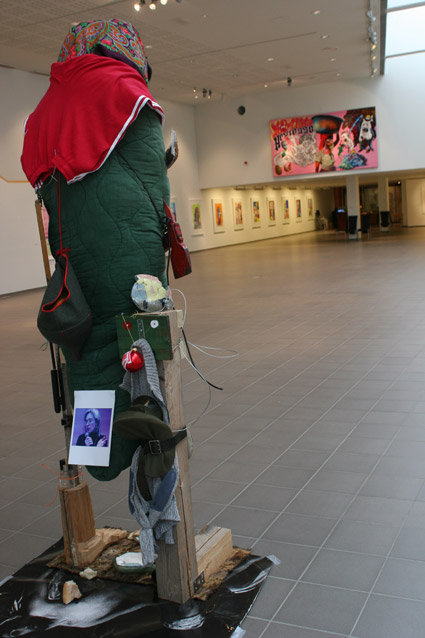
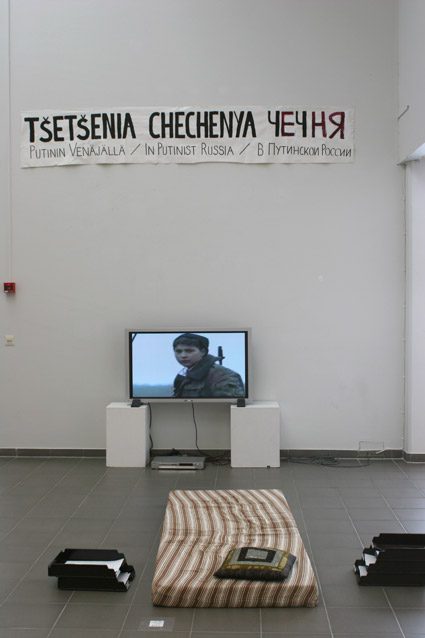
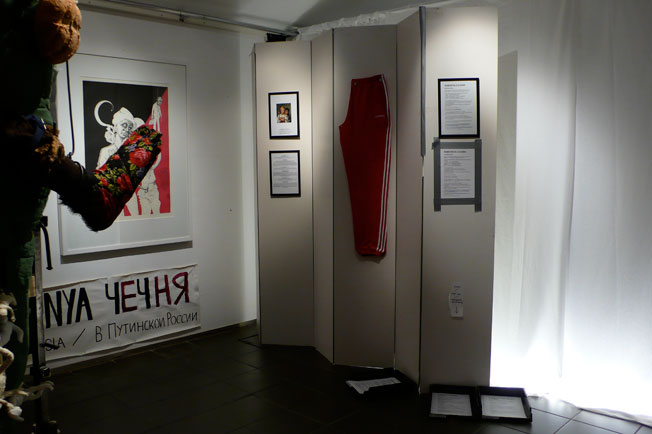
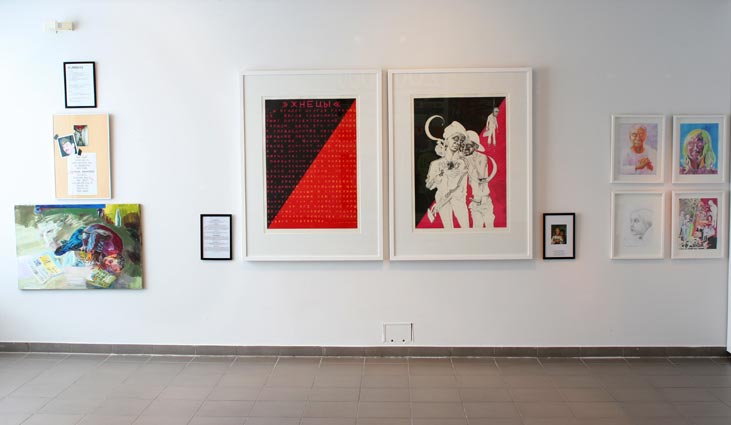
The overviews & details of the installation are from Helsinki Biennale 2008 (Design Museum Helsinki, Finland) and from my solo show How to Live? / Why to Live (Kemi Art Museum, Finland, 2010).

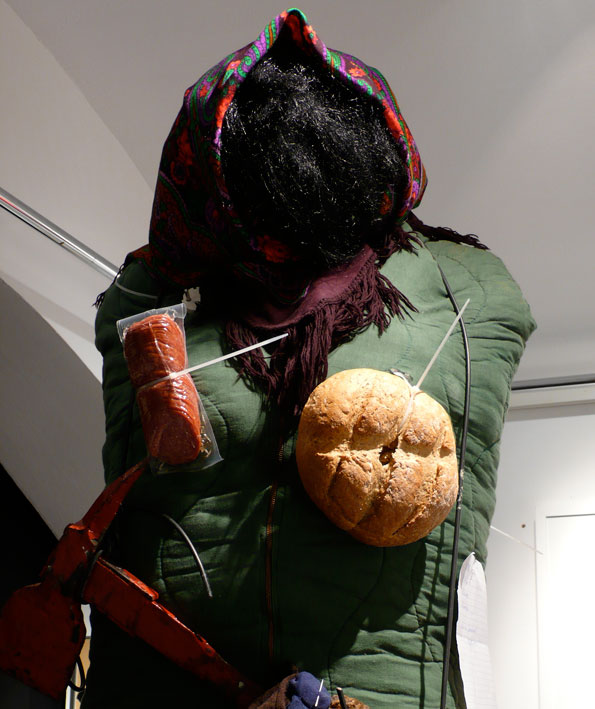
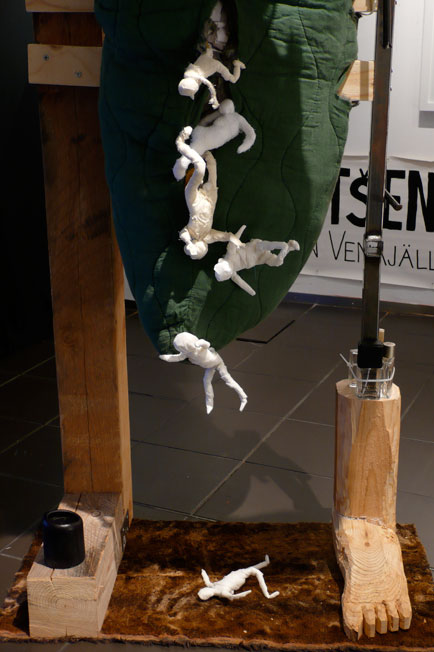
mother russia upper part     mother russia lower part


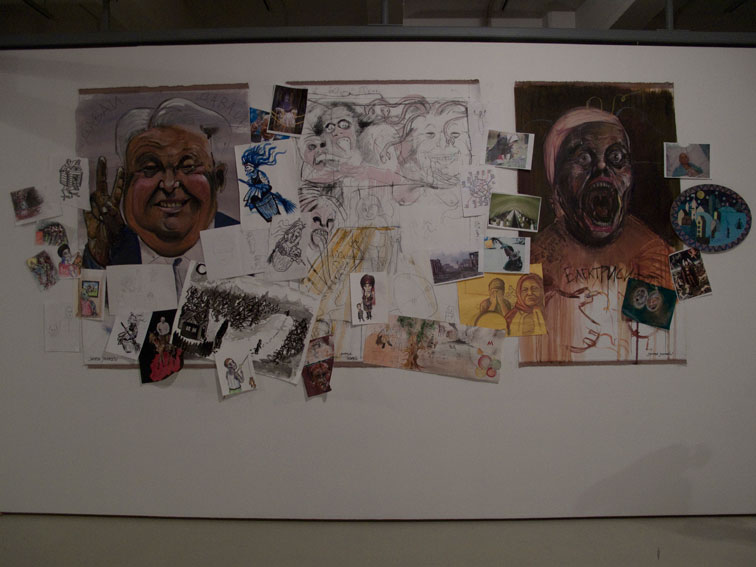
in memoriam anna politkovskaya


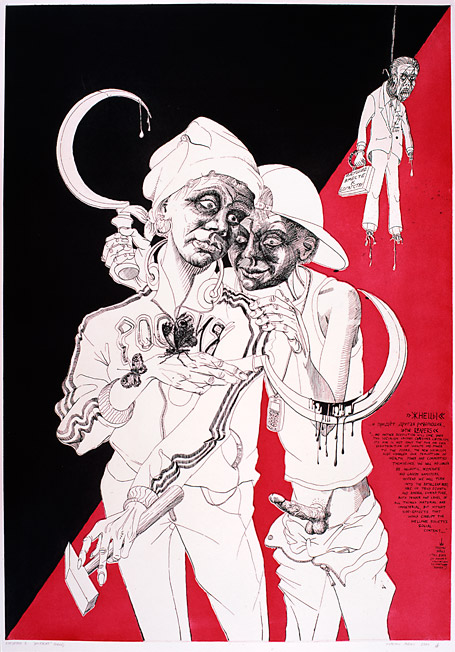
THE REAPERS

"...and another revolution will come. When this socialism crushes consumer capitalism, its aim is not only the fair and even redistribution of wealth and power to the people. The new socialism also changes our perception of wealth, power and commodities themselves. We will no longer be neurotic, desperate, greedy hamsters but we’ll turn into the Bataillean hero, able of truly ecstatic and amoral expenditure, both tender and cruel, of all things material and immaterial, but without side-effects that would corrupt the wellfare society’s social contract...”

Teemu Mäki 2.10.2003, a text for the painting (and for the etching/aquatint diptych) THE REAPERS, which is a version of a Russian classic: A.G. Venetsianov’s (1780–1847) painting Reapers (1820s, The Russian Museum, St. Petersburg, Russia).
NIITTÄJÄT

"...ja seuraava vallankumous tulee. Kun tämä sosialismi murskaa kulutuskapitalismin, sen päämäärä ei ole vain vaurauden ja vallan reilu tasajako ihmisten kesken, sillä uusi sosialismi muuttaa myös käsityksemme vauraudesta, vallasta ja hyödykkeistä sinänsä. Emme ole enää neuroottisia, epätoivoisen ahneita hamstereita ja keräilijöitä, vaan meistä tulee Georges Bataillen tarkoittama sankari, joka pystyy ekstaattiseen ja amoraaliseen tuhlaukseen, materiaalisten ja immateriaalisten asioiden tuhlaukseen, hellään ja julmaan tuhlaukseen, mutta ilman sivuvaikutuksia, jotka mädättäisivät hyvinvointiyhteiskunnan yhteiskuntasopimuksen...”

Teemu Mäki, 2.10.2003, teksti maalaukseen (ja grafiikka-diptyykkiin) NIITTÄJÄT, joka on versio eräästä venäläisestä klassikosta, A.G. Venetsianovin (1780–1847) maalauksesta Niittäjät (1820-luvulta, Venäläisen museon kokoelmat, Pietari).
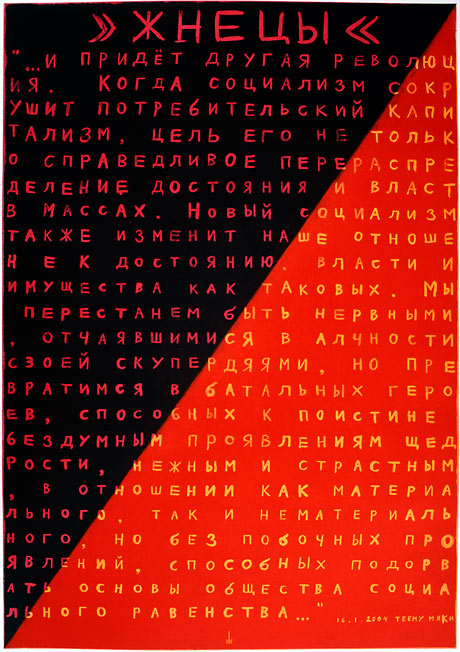
«ЖНЕЦЫ»

«... и придёт другая революция. Когда социализм сокрушит потребительский капитализм, цель его не только справедливое перераспределение достояния и власти в массах. Новый социализм также изменит наше отношение к достоянию, власти и имущества как таковых. Мы перестанем быть нервными, отчаявшимися в алчности своей скупердяями, но превратимся в батальных героев, способных к поистине бездумным проявлениям щедрости, нежным и страстным, в отношении как материального, так и нематериального, но без побочных проявлений, способных подорвать основы общества социального равенства…»

ТЕЕМУ МЯКИ, 2.10.2003: ТЕКСТ К КАРТИНЕ «ЖНЕЦЫ»
Это моя версия картины русского классика: «Жнецы» А.Г. Венецианова (1780–1847),
выставленной в Русском музее, в Санкт-Петербурге.


LIST OF CONTENTS:
1.
Mother (Russia?) / Äiti (Venäjä?)
sculpture (wood, metal, etc.)
2.
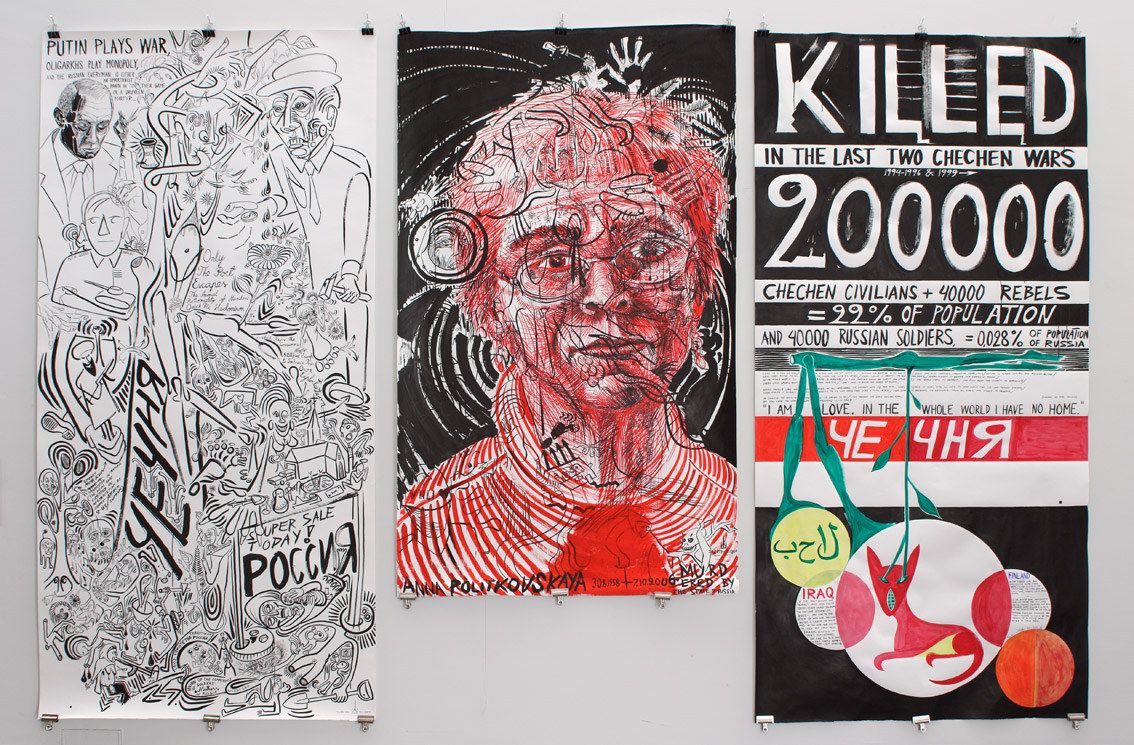
In Memoriam Anna Politkovskaya / Anna Politkovskajan muistolle
mixed media on paper, triptych, 310 x 460 cm, 2009–2010.
3.
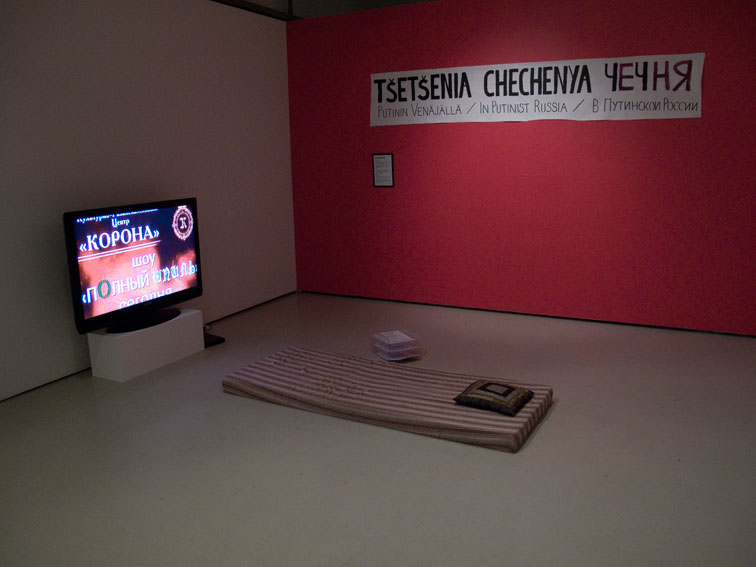
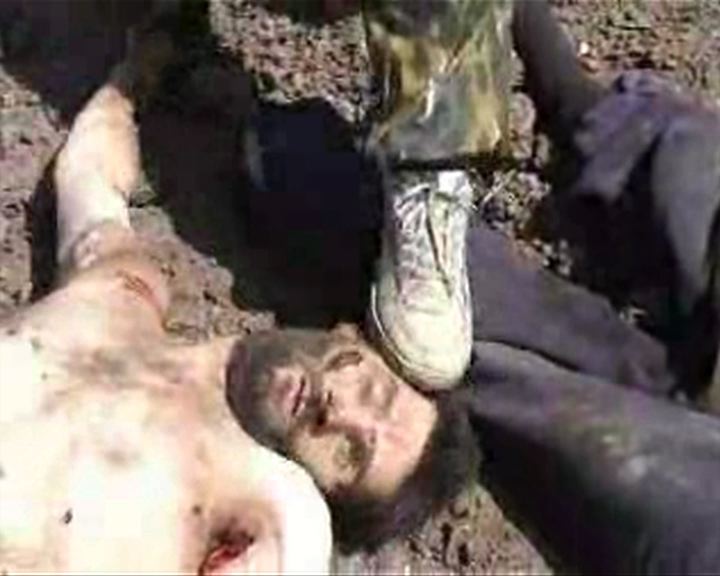
Neon Lights in Moscow / Rush Hour in Helsinki / War in Chechnya
video loop, 10 minutes
4.
Reapers (after A.G. Venetsianov, 1780–1847) / Niittäjät (A.G. Venetsianovin (1780–1847) mukaan)
diptych, 2004,
hard-ground etching & aquatint, 140 x 100 cm (image 90 x 63 cm) each
5.
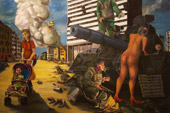
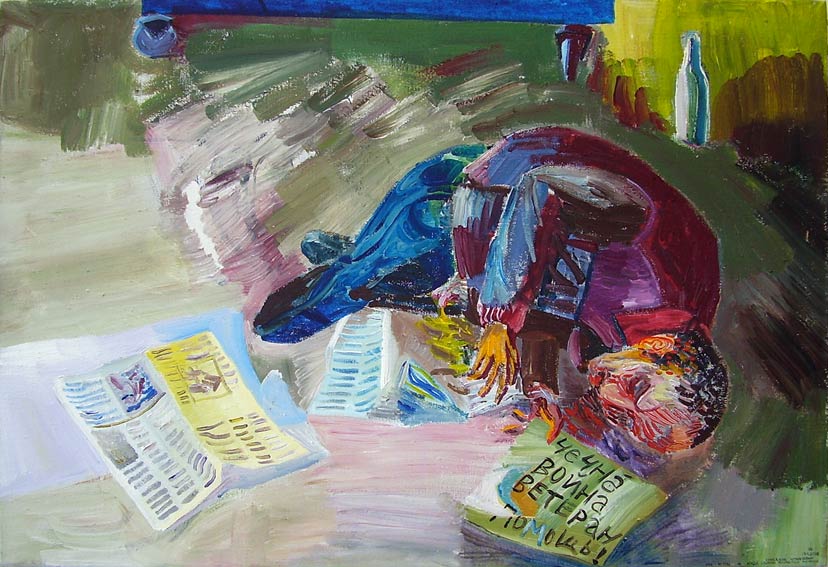
Russian Veteran Drinks, Bleeds and Begs on Ligovsky Prospekt, St. Petersburg, Russia
/ Venäläinen sotaveteraani juo, vuotaa ja kerjää Ligovski prospektilla, Pietarissa
17.4.2008, acrylic on canvas, 60 x 90 cm
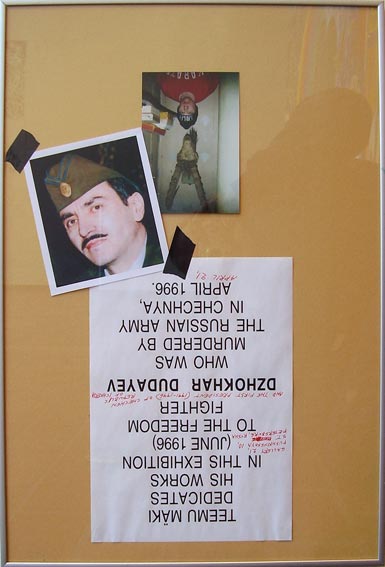
6.
Dudayev Dedication
1996/2008, collage with text and two photos, 60 x 41 cm
7.
Four small drawings:
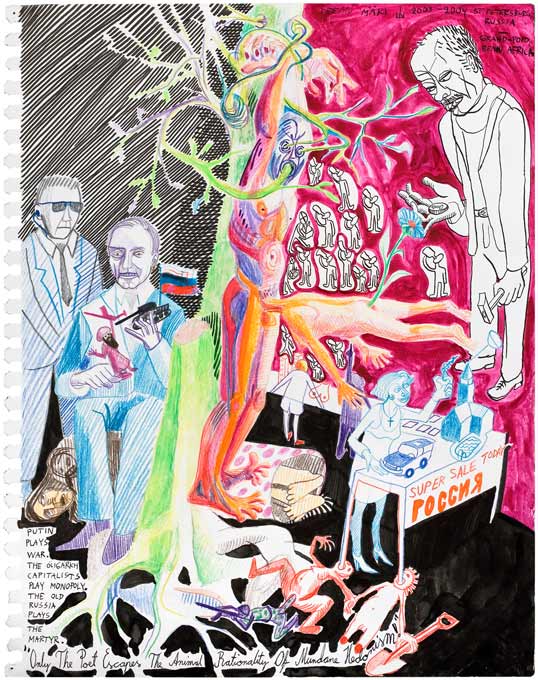
Only the Poet Escapes... (...the Animal Rationalism of Mundane Hedonism.) / Vain runoilija pääsee karkuun... (...arkipäiväisen hedonismin eläimellistä rationaalisuutta.)
2003–2004, mixed media on paper, 27 x 35 cm
Julia, mixed media on paper, 27 x 35 cm
Ursula, mixed media on paper, 27 x 35 cm
Epäuskoinen rukoilee / Disbeliever Praying, mixed media on paper, 27 x 35 cm
...
and a copy of A.G. Venetsianov's (1780–1847) painting Reapers.
8.
Numeroita / Numbers
text in 3 languages, 30 x 21 cm each
9.
The Civil War Goes On / Kansalaissota jatkuu
an essay about the Finnish Civil War (1918) / essee Suomen kansalaissodasta (1918)
10.
Love Is Flying So High a Human Mind Can Not Reach It / Rakkaus liitää ihmismielen tavoittamattomissa
11.
Pondering Mattress /
Pohtimispatja

A few students from Aalto University / TaiK – Juho Hellsten, Katri Kainulainen, Salli Kari, Kristina Sedlerova and Johanna Torkkola – have helped me in creating some parts of this installation.

*

The next version of the installation will be expanded with a few added features:

– Videotaped interviews of retired Chechnyan rebel fighters, now living in exile in Finland.
– A collective oil painting dealing with Russian oligarchy and patriotism.
– Water color portrait of a Chechen mother

*

The core text:
 
NUMBERS (23.1.2010)

CHECHNYA

– In the most recent Russian caucus (2002) the population of Chechnya was 1 103 686 and that of the whole Russia 145 166 731.
– In the last two Chechen wars (1994–1996 & 1999–) [i] 150 000 – 200 000 Chechen civilians and 20 000 – 40 000 Chechen rebels have been killed. That's 15 – 22 % of the population of Chechnya.
– 20 000 – 40 000 Russian soldiers have died in these wars. That's 0,0137 – 0,028 % of the population of Russia.
– Other consequences: In 2004 Russia designated one-third of Chechnya "a zone of ecological disaster" and another 40% "a zone of extreme environmental distress". Chechnya's water resources are polluted and undrinkable to a depth of 250 m.
 
IRAQ
 
– In 2003 the population of Iraq was approximately 28 000 000 [ii].
– In the most recent attack (2003) USA killed 13 500 – 45 000 Iraqi soldiers [iii].
– The ensuing occupation of Iraq by USA has led to the death of over one million Iraqi civilians. That's 3,53 % of Iraq's population [iv].
– In the war and during the occupation USA has lost 4 287 soldiers so far. That's 0,00141 % of USA's population [v].
 
In comparison it's good to remember:
 
FINLAND
 
– In 1917 the population of Finland was 3 134 300.
– In the Finnish Civil War (27.1.–15.5.1918) 36 640 Finns were killed. That was 1,17 % of the population. Two thirds died in executions, murders and prison camps [vi].
 
– In 31.12.1938 the population of Finland was 3 672 100.
– In the Winter war, Continuation war and Lapland war (1939–1945) 86 413 Finnish soldiers and 2 500 civilians were killed. That was 2,42 % of the population [vii].

– 400 000 Russian soldiers and 7 000 civilians were killed in these Finnish wars. That was 0,21 % of the population.


[i] Exact figures not known. The numbers are based on various estimates for example by Amnesty International (http://www.amnesty.org/), Jane's Information Group (http://www.janes.com/), Prague Watchdog (http://www.watchdog.cz) and Russian-Chechen Friendship Society (RCFS, http://www.uic.nnov.ru/hrnnov/rus/friend/2003e/indexe.htm).

[ii] CIA World Factbook https://www.cia.gov.

[iii] Steele, 2003

[iv] ORB's research, published in January 2008 (Opinion Research Business, London, http://www.opinion.co.uk). Up till then, counting from the beginning of the war (20.3.2003), 1 033 000 Iraqis had died because of the war. In April 2008 the population of Iraq was 28 221 181.

A completely different estimate has been published by Iraqi Body Count (http://www.iraqbodycount.org/). According to them by 31.3.2008 there had been only 84 389 – 92 067 certified Iraqi deaths.

However, both ORB's and IBC's numbers can be correct, even though the former ends up with an estimate that is ten times bigger than the latter's estimate. The difference results from the differences in measuring criteria. IBC lists only violent deaths that have occurred in military action or terror strikes – and of those only the deaths that have been confirmed and identified by multiple sources. ORB in turn observes the raise in general mortality rate of Iraq and claims that all of the increase must be assumed to be caused by the war and occupation – meaning that for example the death rate increase caused by the collapse of the Iraqi health care system is included in the ORB's war casualties statistics.

[v] According to the US military it had by 31.12.2009 lost 4 287 soldiers in the war & occupation (http://icasualties.org / http://www.globalsecurity.org/military/ops/iraq_casualties.htm) and the population of USA was 304 289 000 in 2008.

[vi] According to the Finnish National Archive (http://vesta.narc.fi/cgi-bin/db2www/sotasurmaetusivu/stat2) 9 403 died in battle, 9 720 were executed/murdered, 13 446 died on prison camps, 613 soon after been released froom prison camps, 2 193 disappeared and 1 265 were killed by other means.

[vii] Statistics Finland, a government agency, http://www.stat.fi/org/index.html


NUMEROITA (23.1.2010)
 
TŠETŠENIA
 
– Venäjän tuoreimmassa väestönlaskennassa (2002) Tšetšenian väkiluku oli 1 103 686 ja koko Venäjän 145 166 731.
– Kahdessa viimeisimmässä Tšetšenian sodassa (1994–1996 & 1999–) [1] on tapettu 150 000 – 200 000 tšetšeenisiviiliä ja 20 000 – 40 000 tšetšeenikapinallista. Se on 15 – 22 % Tšetšenian väestöstä.
– 20 000 – 40 000 venäläistä sotilasta on kuollut näissä sodissa. Se on 0,0137 – 0,028 % Venäjän väestöstä.
– Sotien muita seurauksia: Vuonna 2004 Venäjä luokitteli 33% Tšetšeniasta "ekokatastrofialueeksi" ja sen lisäksi 40% "äärimmäisen ympäristöhaitan alueeksi". Tšetšenian pohjavedet ovat saastuneet juomakelvottomiksi 250 metrin syvyyteen saakka.
 
IRAQ
 
– 2003 Irakin asukasluku oli 28 000 000 [2].
– Viimeisimmässä sodassa (2003) USA tappoi 13 500 – 45 000 irakilaissotilasta [3].
– Sotaa seurannut miehitys on johtanut yli miljoonan irakilaissiviilin kuolemaan. Se on 3,53 % Irakin väestöstä [4].
– USA:n sotilaita sodassa ja miehityksessä on tähän mennessä kuollut 4287. Se on 0,00141 % USA:n väestöstä [5].
 
Vertailun vuoksi hyvä muistaa:
 
SUOMI
 
– Suomen väkiluku 1917 oli 3 134 300.
– Kansalaissodassa (27.1.–15.5.1918) tapettiin 36 640 suomalaista sotilasta ja siviiliä (1,17 % väestöstä). Kaksi kolmasosaa teloitettiin, murhattiin tai kuoli vankileireillä [6].
 
– Suomen väkiluku 31.12.1938 oli 3 672 100.
– Talvisodassa, Jatkosodassa ja Lapin sodassa (1939–1945) tapettiin 86 413 suomalaista sotilasta ja 2 500 siviiliä – yhteensä 2,42 % väestöstä [7].
– Venäläisiä sotilaita näissä Suomen sodissa tapettiin 400 000 ja siviilejä 7 000 (0,21 % väestöstä).


[1] Tarkkoja lukuja ei tiedetä. Numerot kertovat missä haarukassa mm. seuraavien tahojen arviot liikkuvat: Amnesty International (http://www.amnesty.org/), Jane's Information Group (http://www.janes.com/), Prague Watchdog (http://www.watchdog.cz) ja Russian-Chechen Friendship Society (RCFS, http://www.uic.nnov.ru/hrnnov/rus/friend/2003e/indexe.htm).

[2] CIA World Factbook https://www.cia.gov.

[3] Steele, 2003

[4] ORB's research, published in January 2008 (Opinion Research Business, London, http://www.opinion.co.uk). Up till then, counting from the beginning of the war (20.3.2003), 1 033 000 Iraqis had died because of the war. In April 2008 the population of Iraq was 28 221 181.

A completely different estimate has been published by Iraqi Body Count (http://www.iraqbodycount.org/). According to them by 31.3.2008 there had been only 84 389 – 92 067 certified Iraqi deaths.

However, both ORB's and IBC's numbers can be correct, even though the former ends up with an estimate that is ten times bigger than the latter's estimate. The difference results from the differences in measuring criteria. IBC lists only violent deaths that have occurred in military action or terror strikes – and of those only the deaths that have been confirmed and identified by multiple sources. ORB in turn observes the raise in general mortality rate of Iraq and claims that all of the increase must be assumed to be caused by the war and occupation – meaning that for example the death rate increase caused by the collapse of the Iraqi health care system is included in the ORB's war casualties statistics.

[5] According to the US military it had by 31.12.2009 lost 4 287 soldiers in the war & occupation (http://icasualties.org / http://www.globalsecurity.org/military/ops/iraq_casualties.htm) and the population of USA was 304 289 000 in 2008.


[6] Suomen Kansallisarkiston (http://vesta.narc.fi/cgi-bin/db2www/sotasurmaetusivu/stat2) mukaan 9 403 kuoli taisteluissa, 9 720 teloitettiin/murhattiin, 13 446 kuoli vankileireillä, 613 niiltä vapauduttuaan, 2 193 katosi ja 1 265 tapettiin muilla tavoin.

[7] Tilastokeskus (Valtion virasto, http://www.stat.fi/org/index.html)

О ЧЁМ ГОВОРЯТ ЦЫФРЫ (1.5.2008)
(...sorry, not as complete as the Finnish/English version...)


По данным переписи населения Российской федерации (2002) население Чеченской республики составляло 1 103 686 7.

В двух последних войнах было убито (1994 - 1996 & 1999) 8:
- 150 000 – 200 000 гражданского населения
- 20 000 – 40 000 чеченских боевиков
- 20 000 – 40 000 русских солдат

Другие последствия войны:
- В 2004 году по российским данным 33% Чечни находились на грани экологической катастрофы, кроме этого, 40% вошли в разряд к экологически неблагополучных территорий
- Подземные воды территории Чечни загрязнены в такой степени, что являются непригодными для питья до уровня 250 метров.


Для сравнения:

- Население Финляндии составляло 31.12.1938; 3 672 100
- В зимней войне, войне продолжения и лапландской войне (1939-1945) было убито 86 413 финских солдат и 2 500 гражданского населения 9.

- Русских солдат в этих финских войнах было убито 400 000 и гражданского населения 7 000.


7: При том, что население Российской Федерации составляло 145 166 731.

8: Точные данные не известны. Следующие инстанции дают статистические данные в своих цифровых пределах:
Amnesty International (http://www.amnesty.org), Jane’s Information Group (http://www.janes.com), Prague Watchdog (http://www.watchdog.cz), Russian-Chechen Friendship Society (RSFS, http://www.uic.nnov.ru/hrnnov/rus/friend/2003e/indexe.htm).

9: Статистический центр Финляндии (http://www.stat.fi/org/index.html)


head with eye bulging out
90 sec TRAILER of the
Neon Lights in Moscow / Rush Hour in Helsinki / War in Chechnya video loop
The duration of the whole loop is 10 minutes.

overview old


Back to Installations

HOME

PAINTING & DRAWING     PRINTMAKING     PHOTOGRAPHY     VIDEO     INSTALLATION     THEATER & PERFORMANCE     TEXT     CV     links