METAMORPHOSEN
/ METAMORFOOSEJA
A multidisciplinary
installation byTEEMU MÄKI
&
lovely collaborators
| A multidisciplinary installation about
human kind's relationship with other species and ecological catastrophes
— and about how to come to terms with mortality and how to find
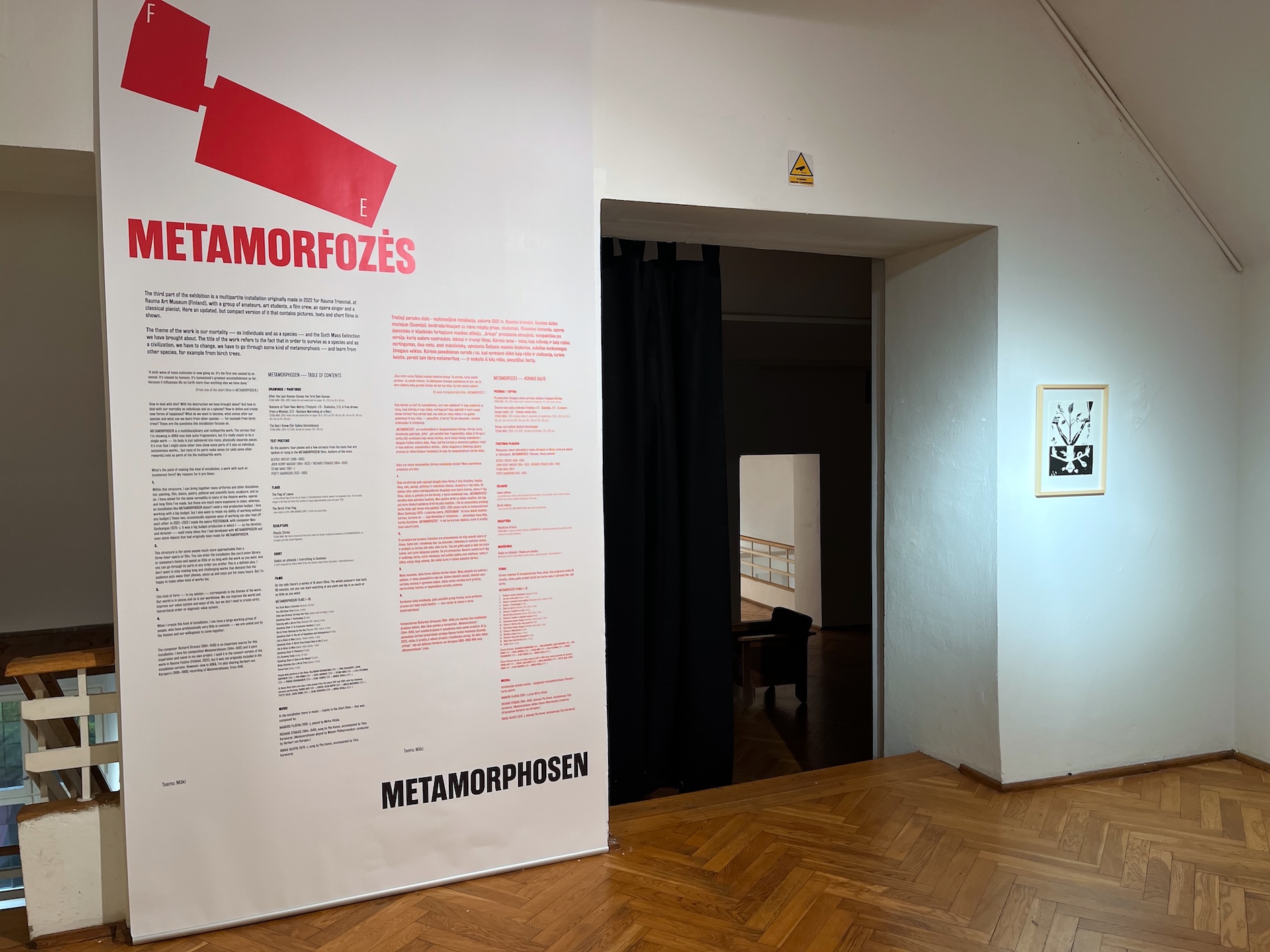
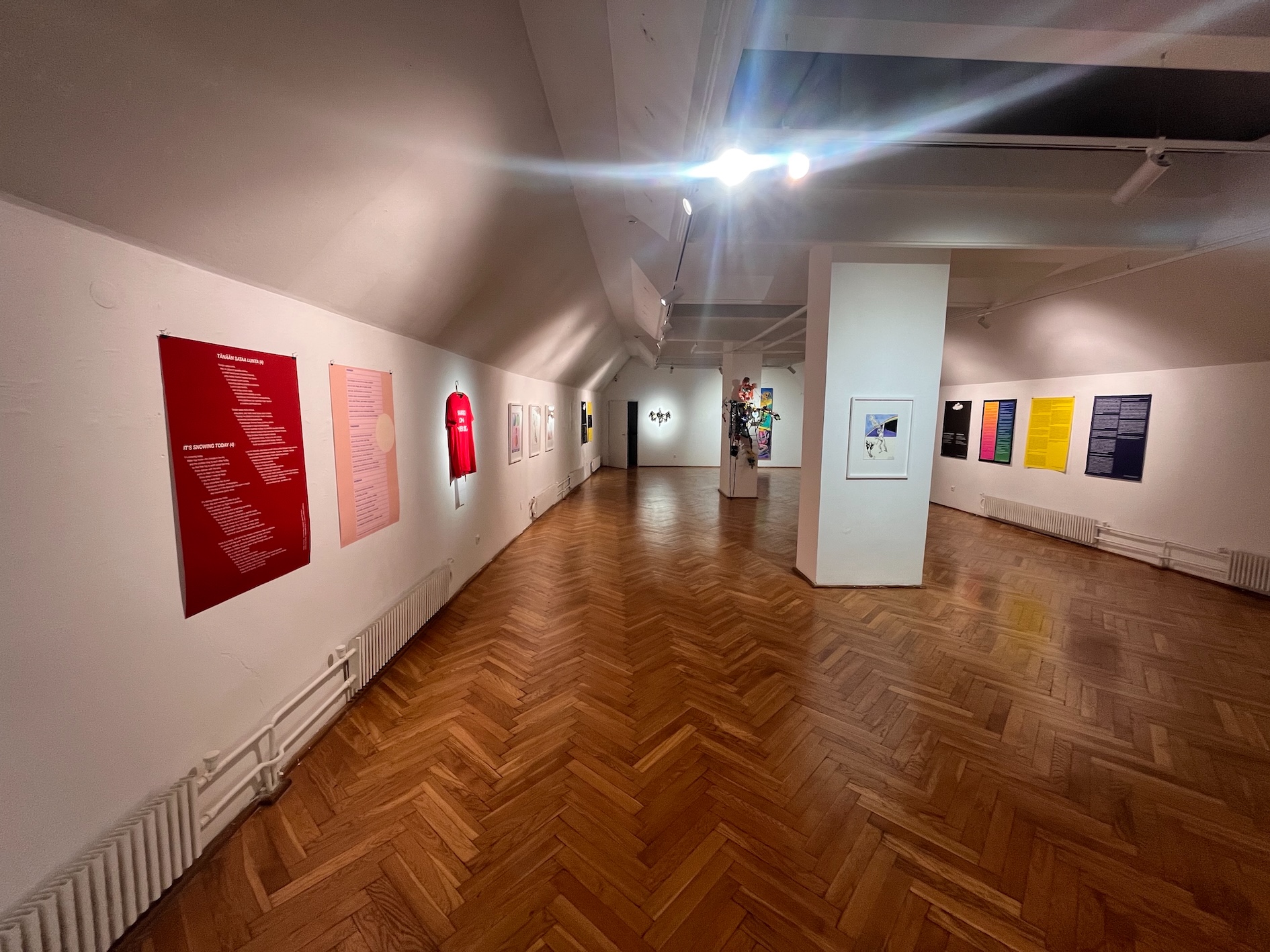
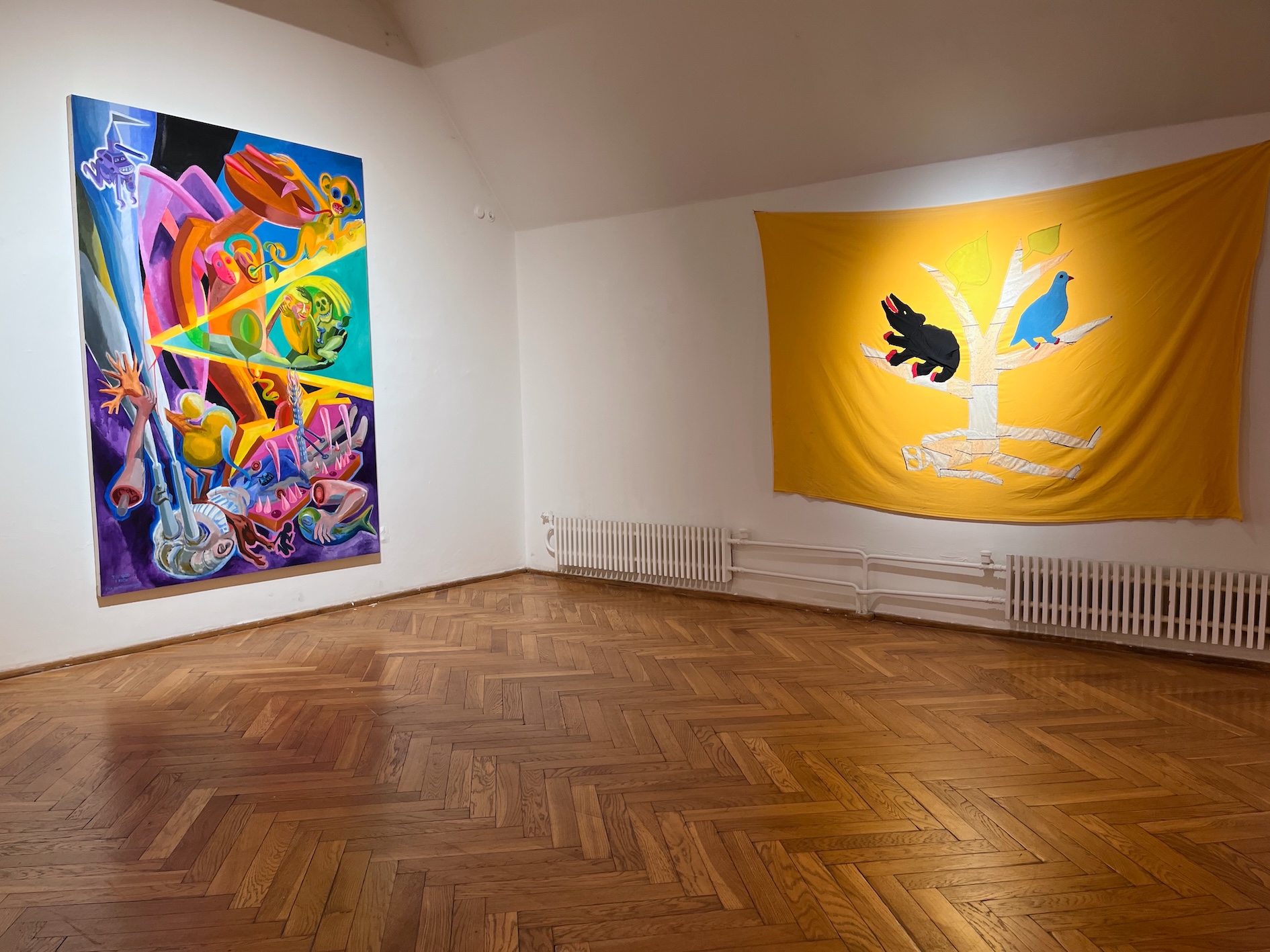
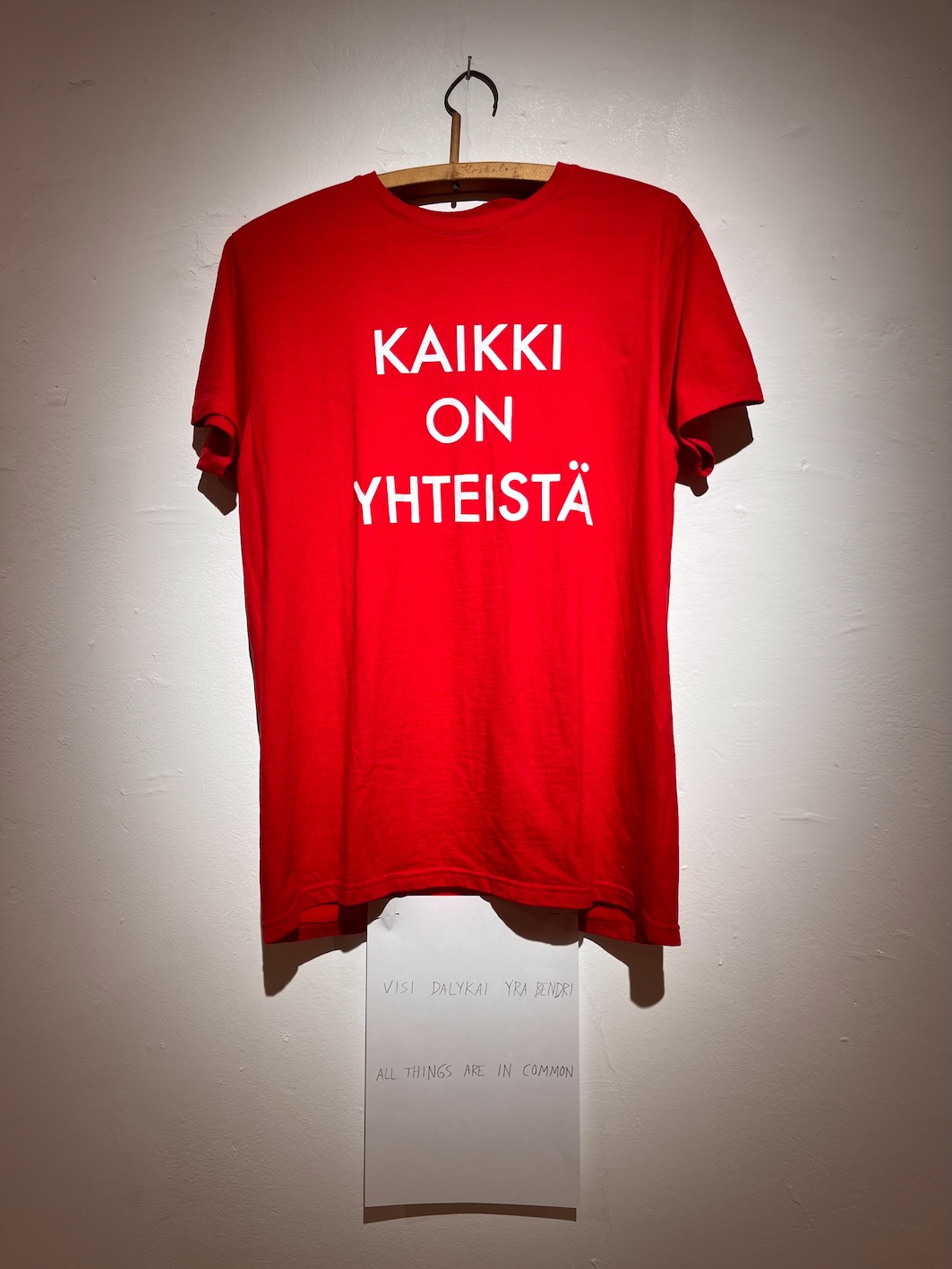
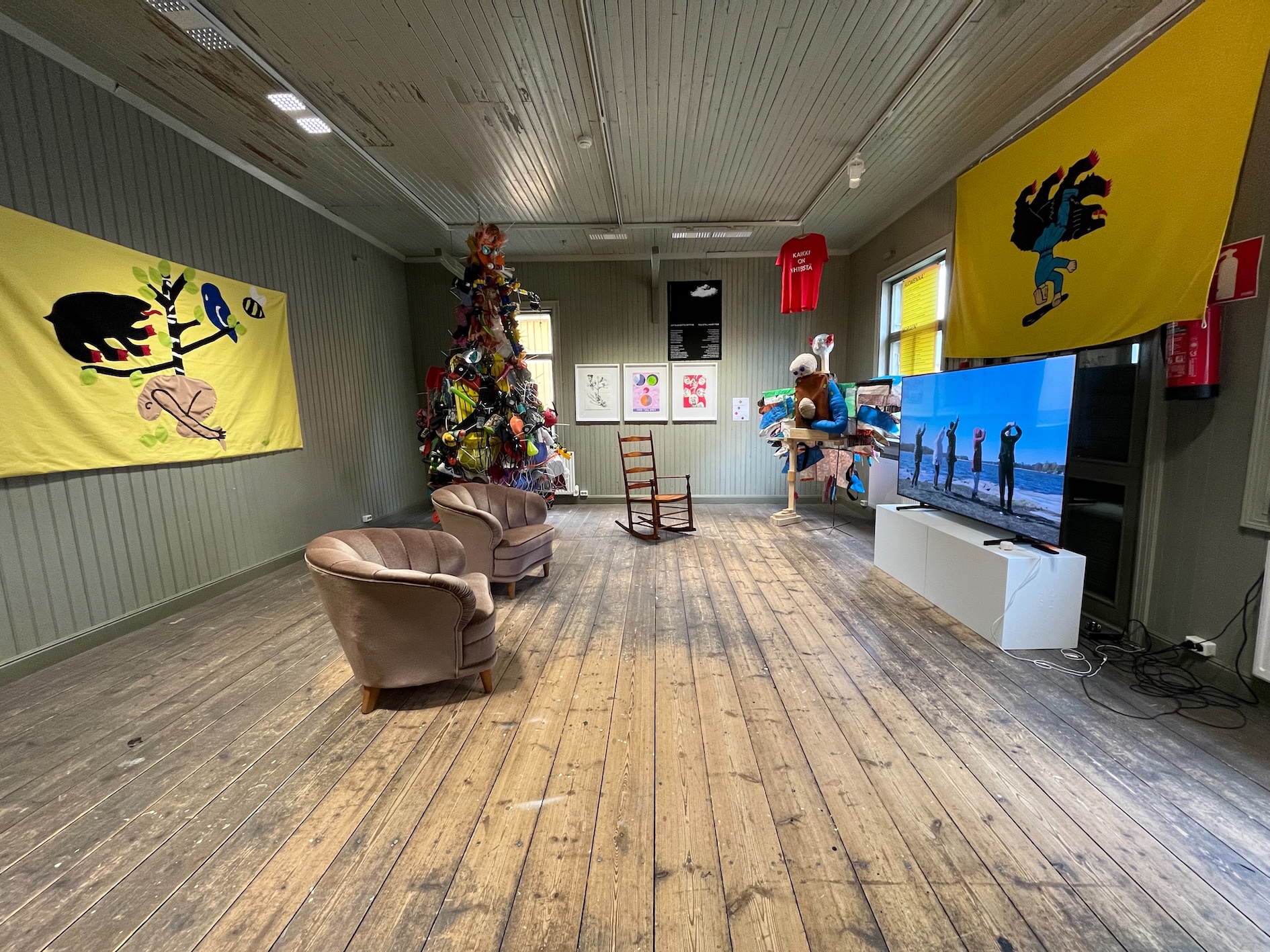
happiness. What comes after human species — or what could humans learn from for example birch trees? — I made the first version of this work for the Rauma Triennale in Rauma Art Museum in Finland in 2022. It was a collaborative work with artists, art students and amateurs. I have since then continued working on this project on my own, expanding it and exhibiting various fragments of it in my exhibitions. The installation consists of drawings, flags, sculptures, posters, texts, music and 16 short films (total duration of those is 80 minutes). — This installation work is very flexible. Some times I've exhibited only a couple of fragments of it, for example a sculptural element with a few posters with texts. And sometimes I've shown only the short films or only a few of them. This flexibility is an integral part of the artistic method used in this project: my intention has been to create a work that can easily be updated and a work that can be expanded or condensed to fit a multitude of spaces and contexts. — The starting point of the work is Richard Strauss's Metamorphosen (1944–1945), which he composed at the end of the Second World War as an elegy to the civilization that he thought had collapsed under Nazism and the war. The composition is an obituary to what was destroyed, but it's also an attempt to imagine new life that can rise from the ruins. Because human kind is now, in 2022, facing self-inflicted catastrophes that are even bigger than the World Wars, we should stop to think what is it that we actually are and what do we want to become — through some kind of metamorphosis. Here's a link to video overview of what it looked like in Rauma Triennale 2022. After the triennale I've exhibited updated parts of the installation in Tallinn (Estonia), Vilnius (Lithuania), Tampere (Finland) and Kajaani (Finland). |
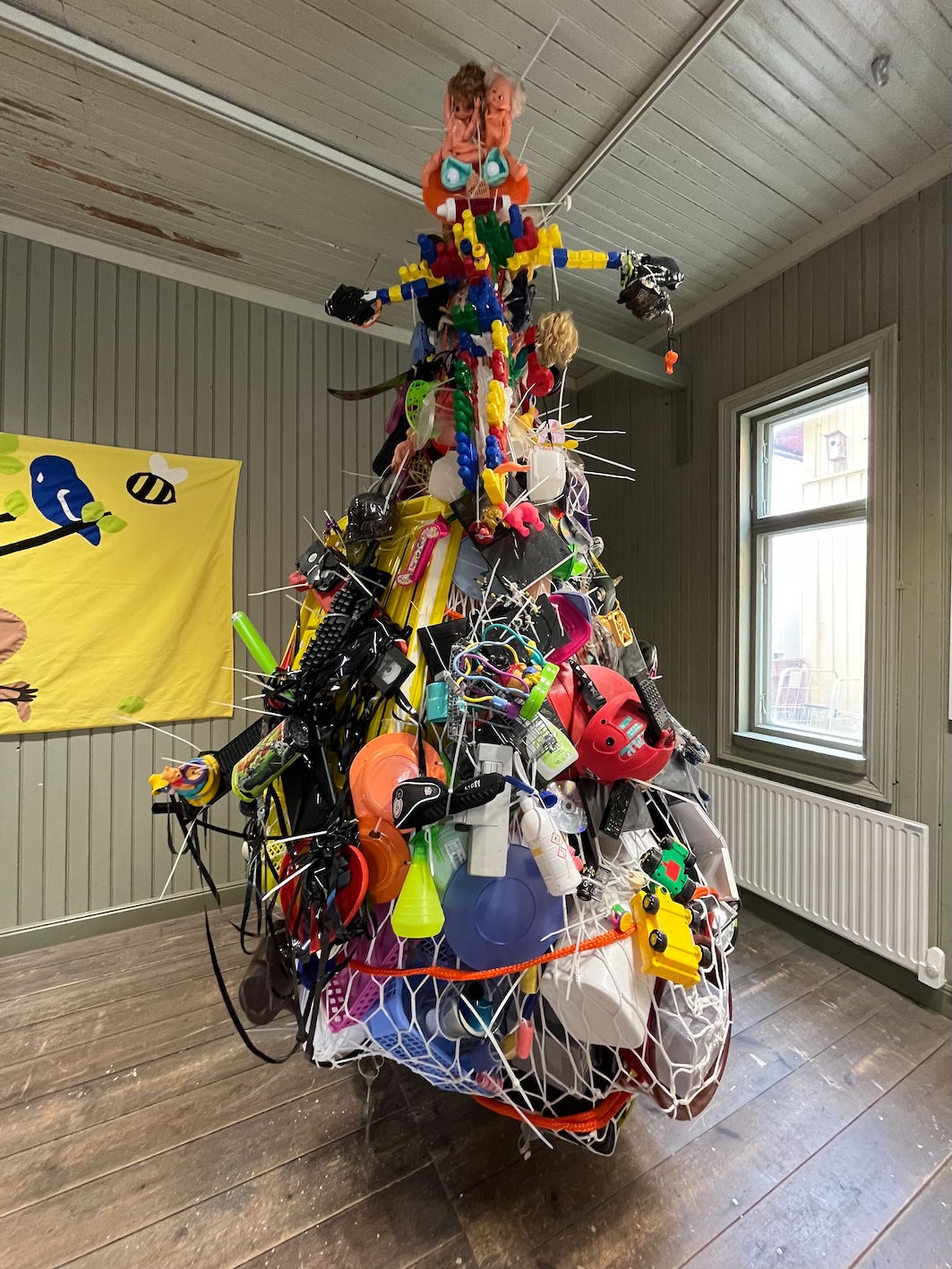
Plastic Sea — a detail from Metamorphosen, Rauma Art Museum 2022.
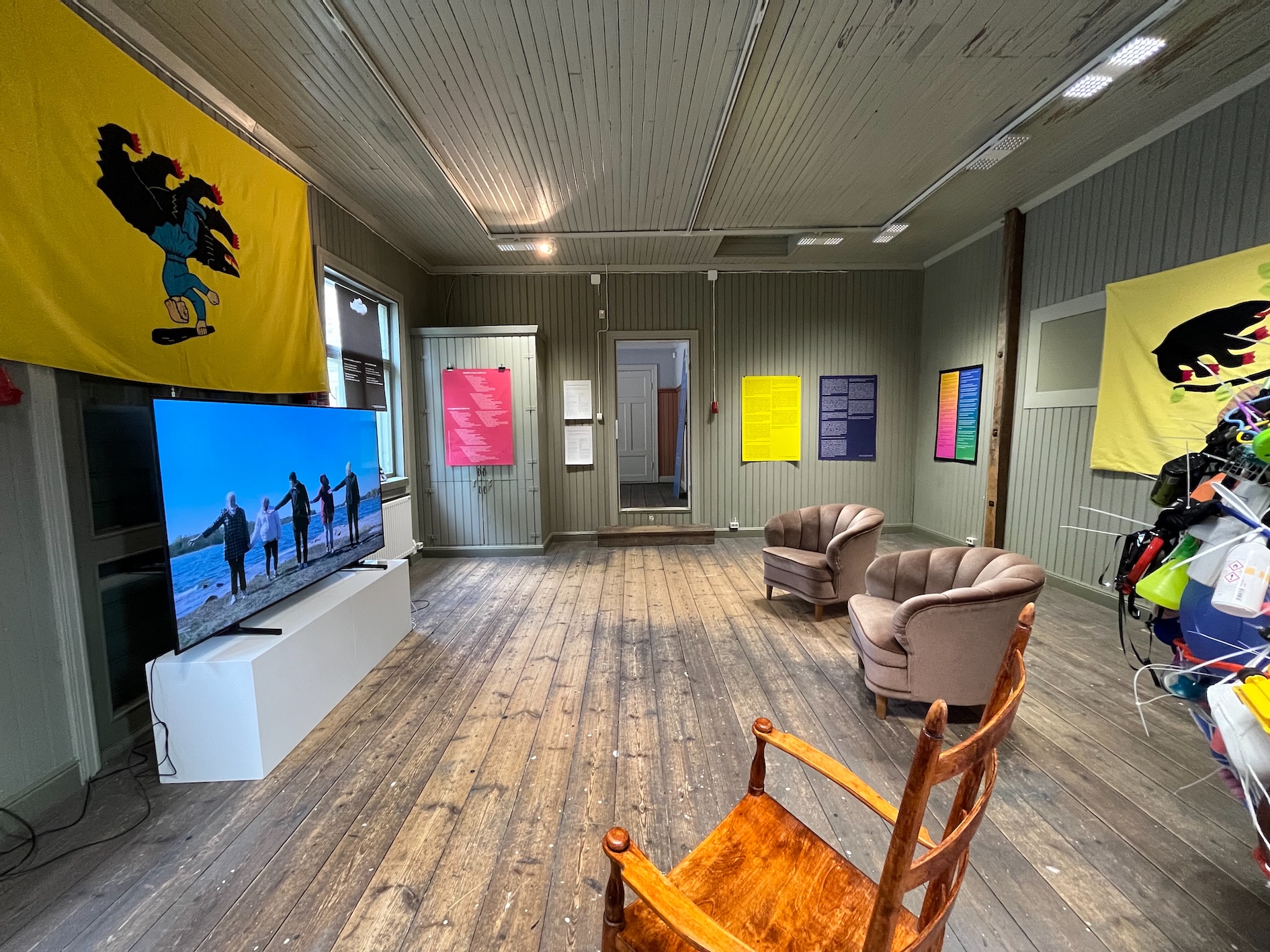
A view of Metamorphosen in Rauma Art Museum 2022.
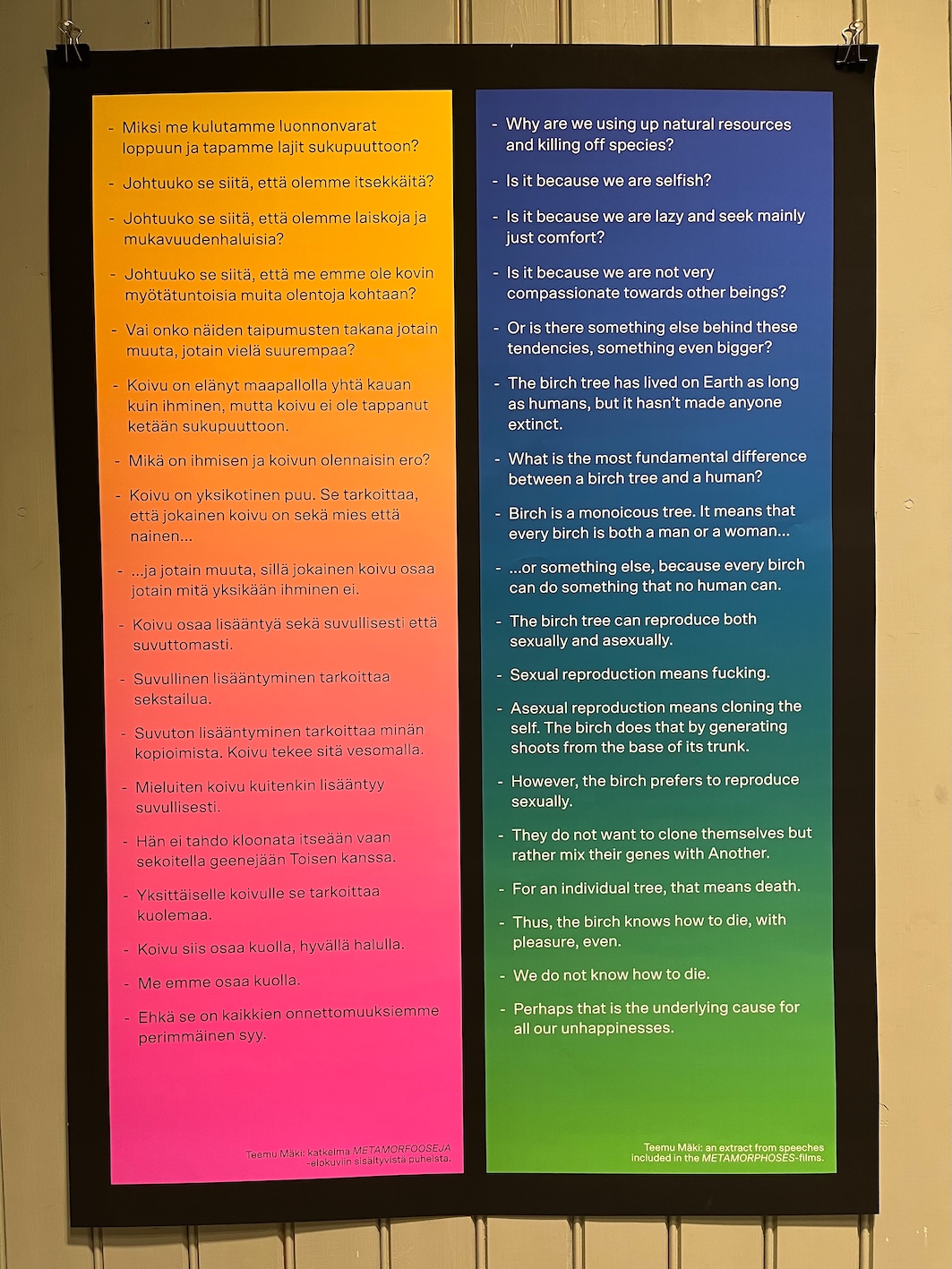
Why are we using up natural resources and killing off species? — a poster from Metamorphosen, Rauma Art Museum 2022.
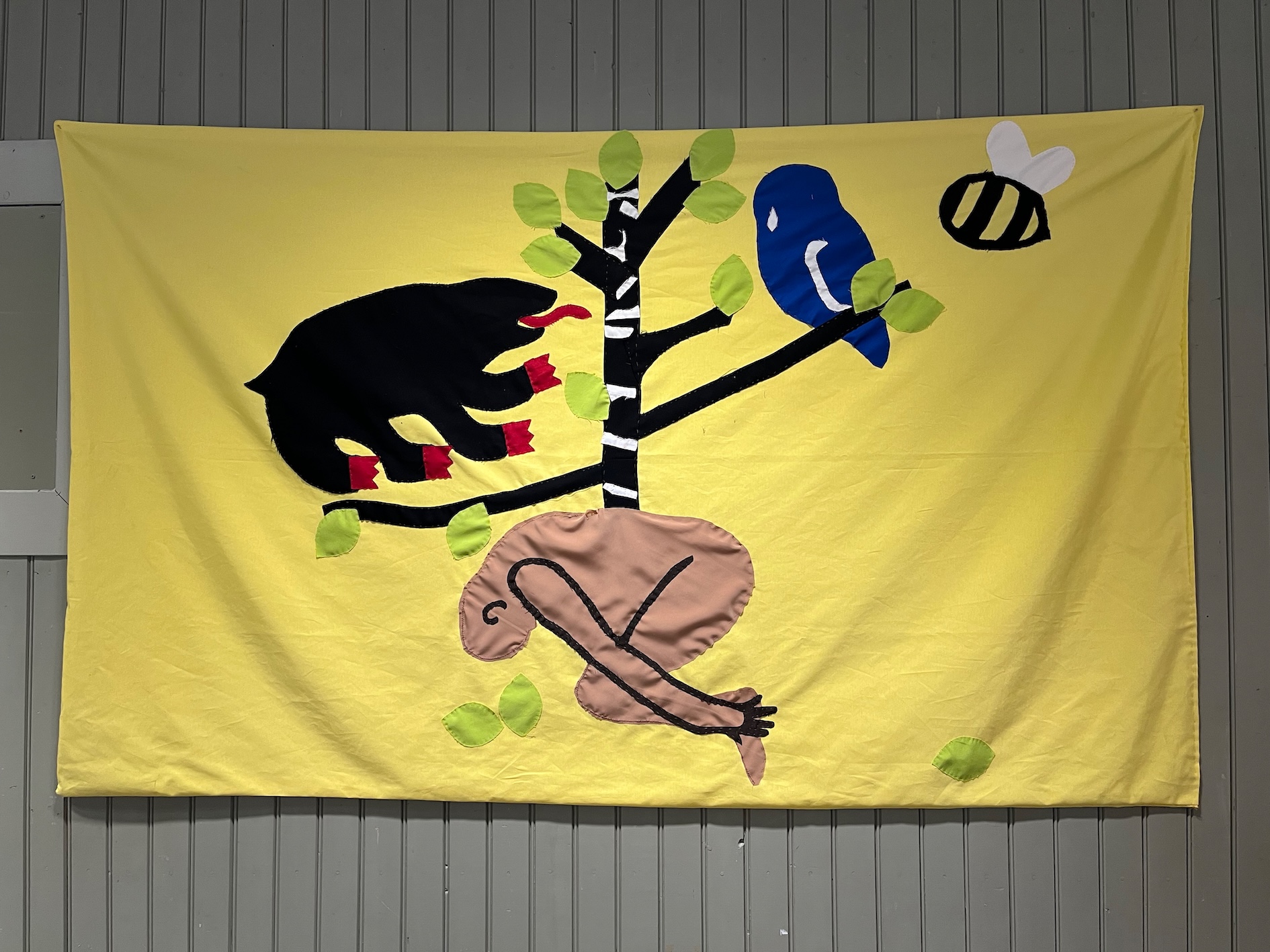
The Birch Tree Flag. Made by Kiia Karjalainen and Viivi Osmonen from a drawing by Teemu Mäki.
A detail from Metamorphosen, Rauma Art Museum 2022.
—
PLASTIC OCEAN / MUOVIMERI
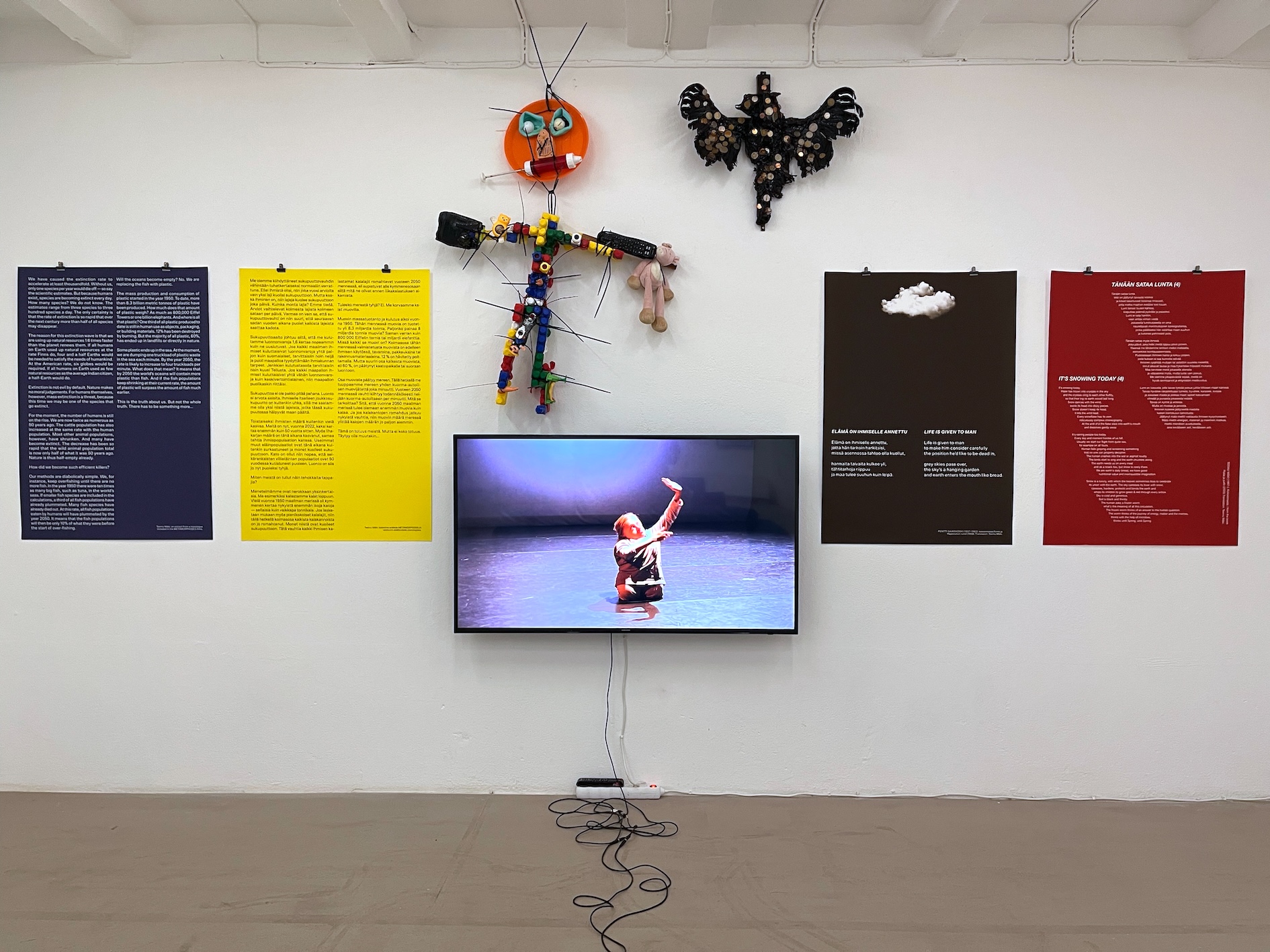
An extract from a recent addition to METAMORPHOSEN, shown in
Under the Surface – Environmental Ideologies / The Sea of the Future exhibition,
ARS Kunstilinnak (ARS Art Factory), Tallinn, Estonia, 16.1. –7.2.2025.
—
PLASTIC JESUS & CRUCIFIED BIRD
Two recent additions to METAMORPHOSEN.
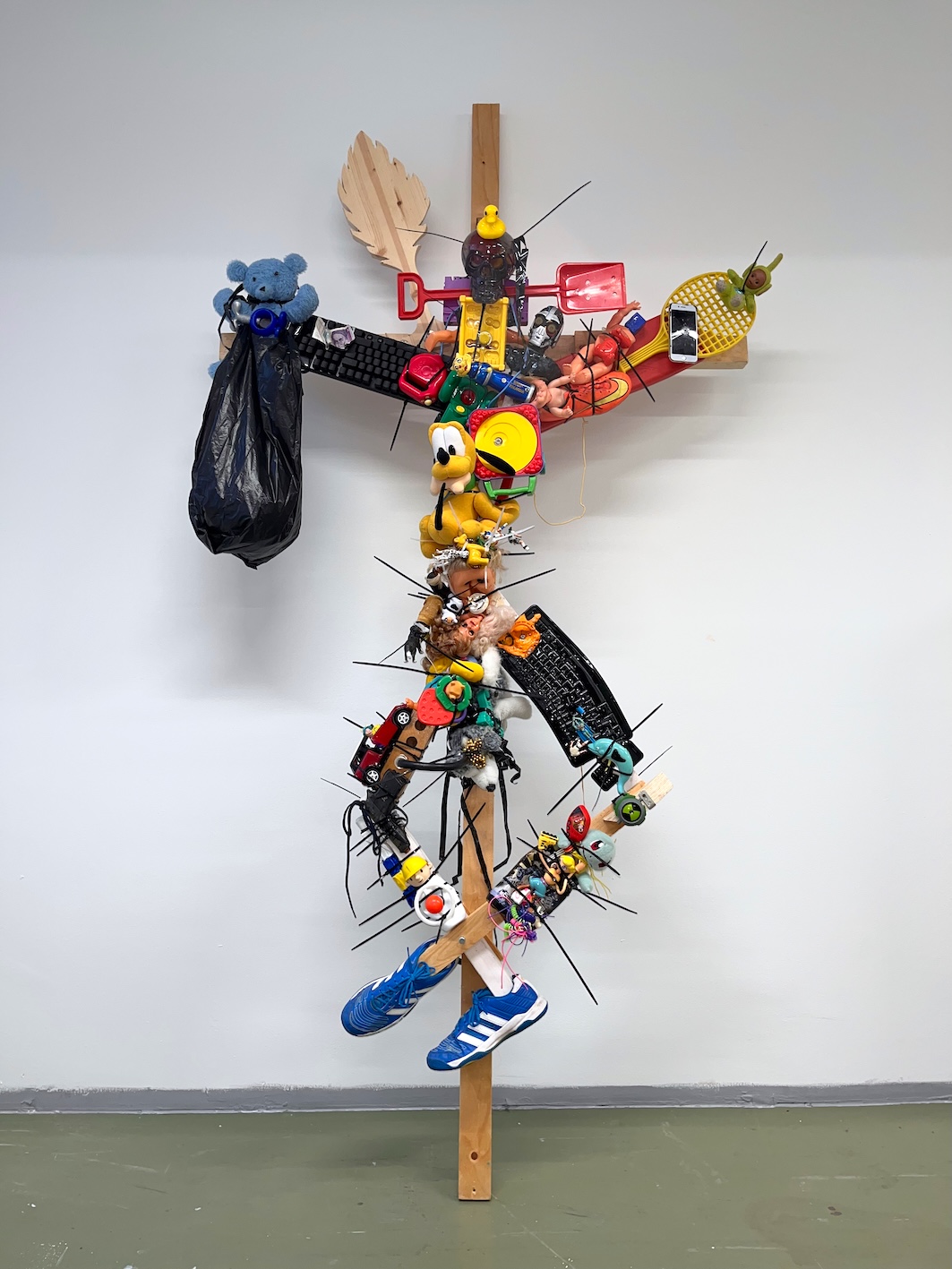
PLASTIC JESUS / MUOVIJEESUS
Mixed media: plastic waste, wood, metal. 247 x 130 x 40 cm. 2025.
First shown in Teemu Mäki's and Reima Hirvonen's exhibition in Härmälä Church,
Tampere, Finland, 2025.
| I made the work Plastic Jesus from
plastic waste, including my own children's old, broken toys. I pieced
together a crucified human figure, which I screwed onto a cross I had
made from wood. In addition to this, the work includes text that is
displayed in the form of posters. The main theme of the work is the
destruction of nature caused by humans. One manifestation of this is the
accumulation of plastic waste in the oceans. Currently, we dump one
truckload of plastic waste into the sea every minute. By 2050, this rate
is likely to increase to four truckloads per minute. What does this
mean? It means that by 2050, there will be more plastic than fish in the
world's oceans. Humans crucified Jesus. Humans are also the only living species that has caused mass extinction — with for example plastic. In the history of Christian art, the crucified Jesus is one of the most important images. It is a concrete example and metaphor for unjust treatment and extreme suffering. |
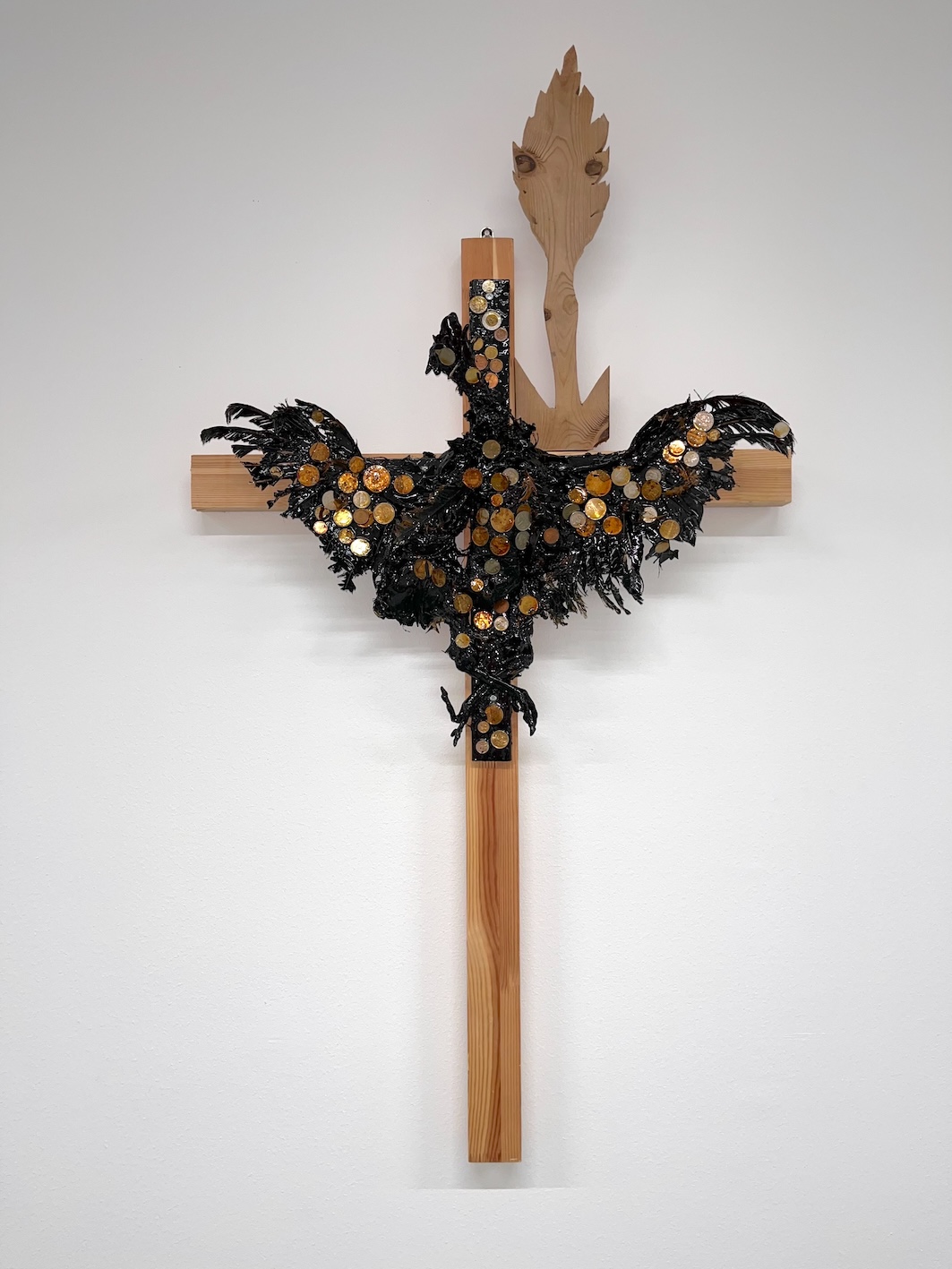
Crucified Animal, Blessed with Money and Oil (2)
/
Ristiinnaulittu eläin, siunattu rahalla ja öljyllä (2)
Mixed media: chicken, wood, paint, laquer, coins. 127 x 77 x 20 cm. 1988/2025.
First shown in Teemu Mäki's and Reima Hirvonen's exhibition in Härmälä Church,
Tampere, Finland, 2025.
| This crucifix dates back to my student
days in 1988. I bought a frozen chicken from a chicken farm, prepared
it, coated it with alkyd paint, alkyd varnish, and coins, and nailed it
to a wooden cross, which I attached to one of my paintings. This year
(2025), I recycled it into a new work by modifying it and adding a tree
leaf I carved from wood. We have caused the sixth mass extinction, so in a way you could say that we have nailed other living species to the cross. There they hang and suffer on our behalf. |
—
METAMORPHOSEN FILMS
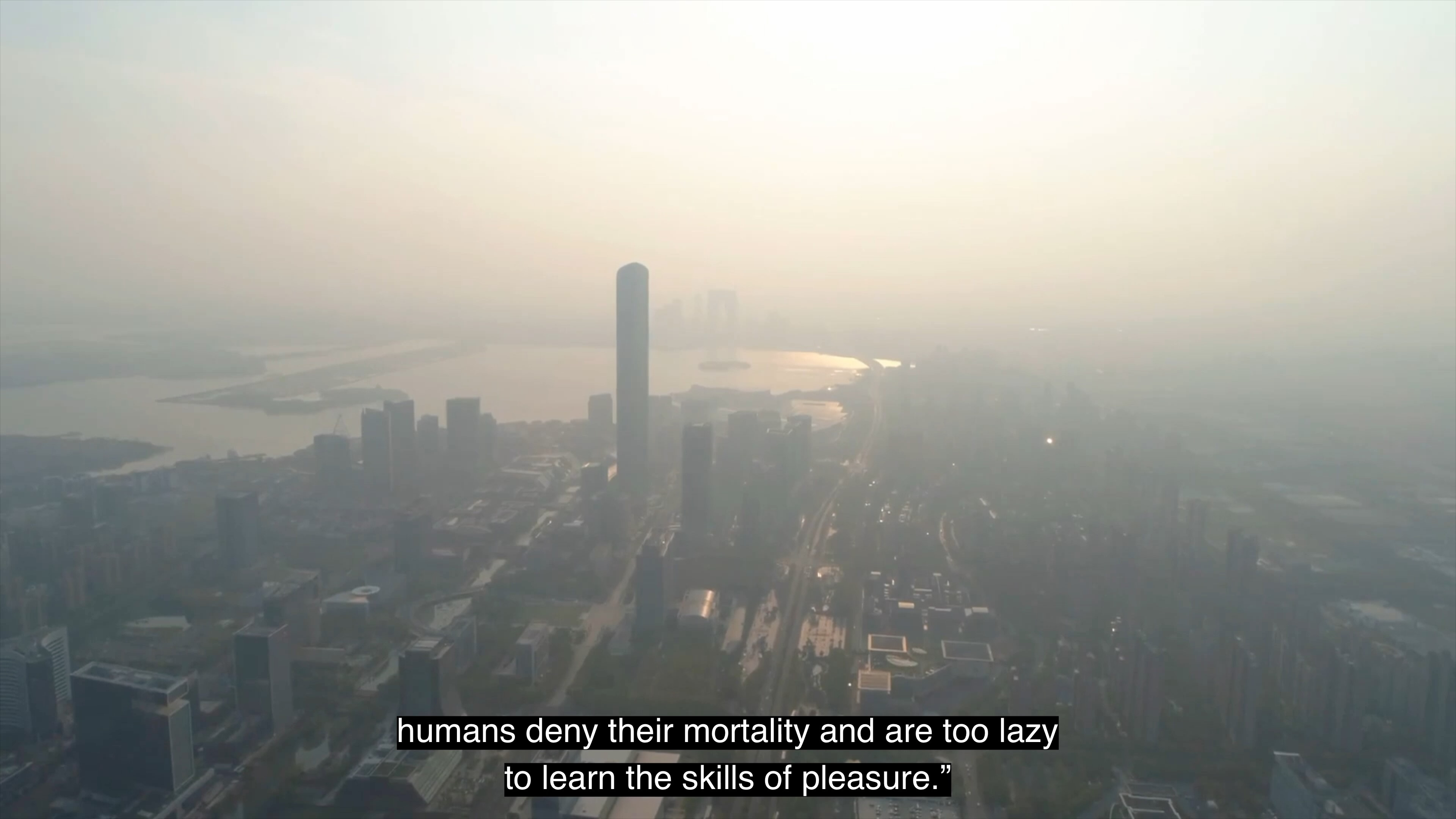
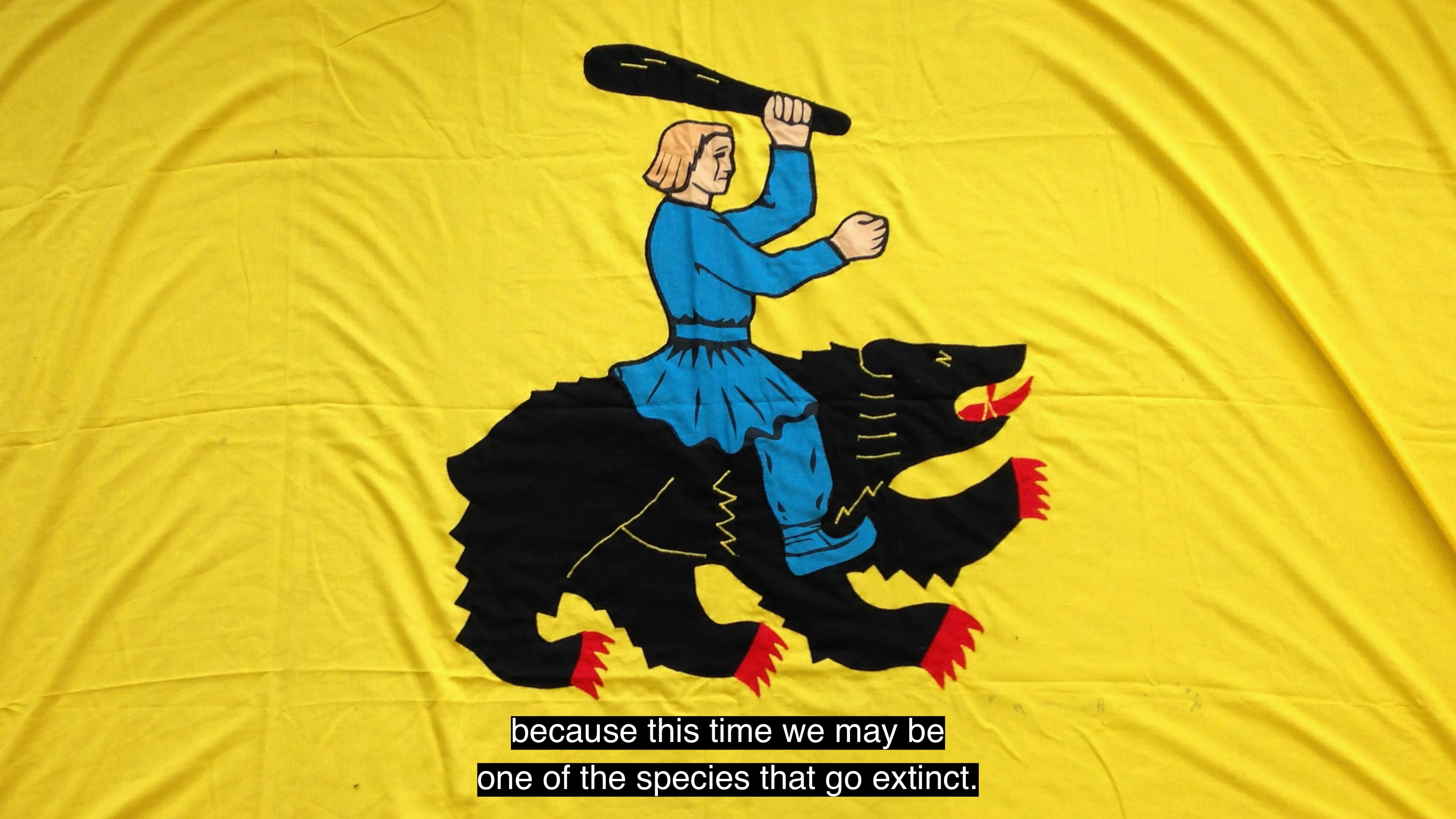
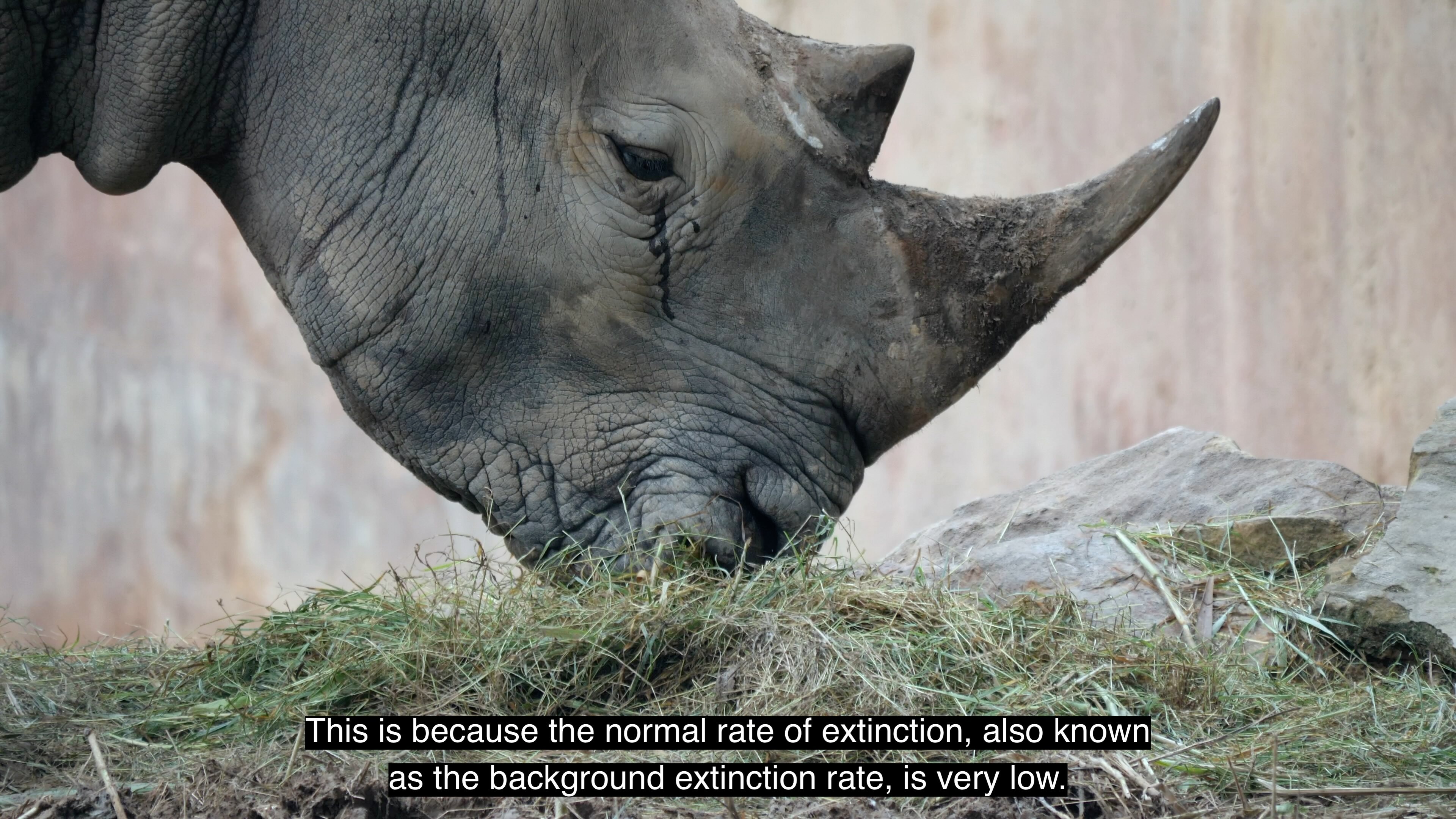
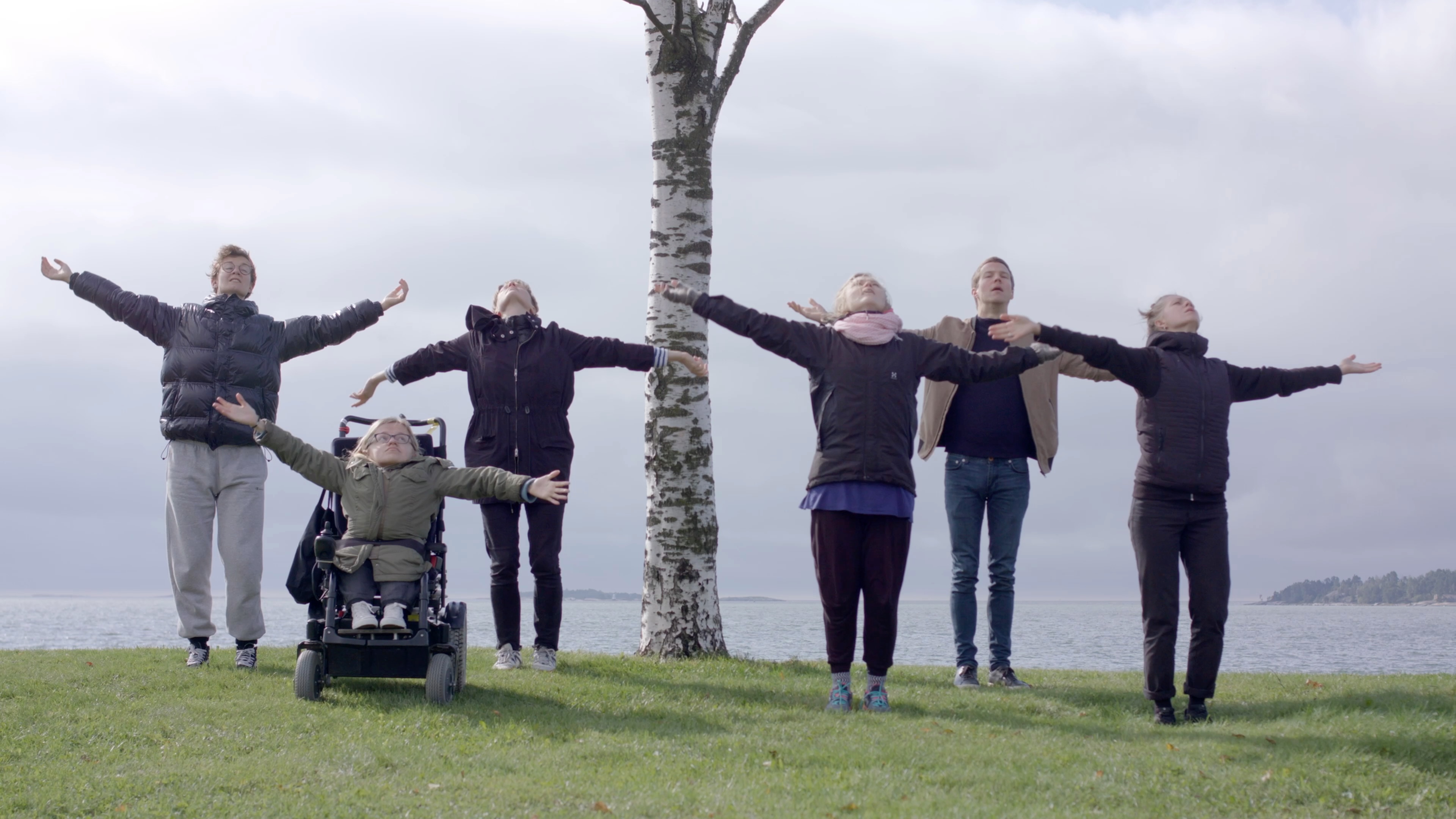
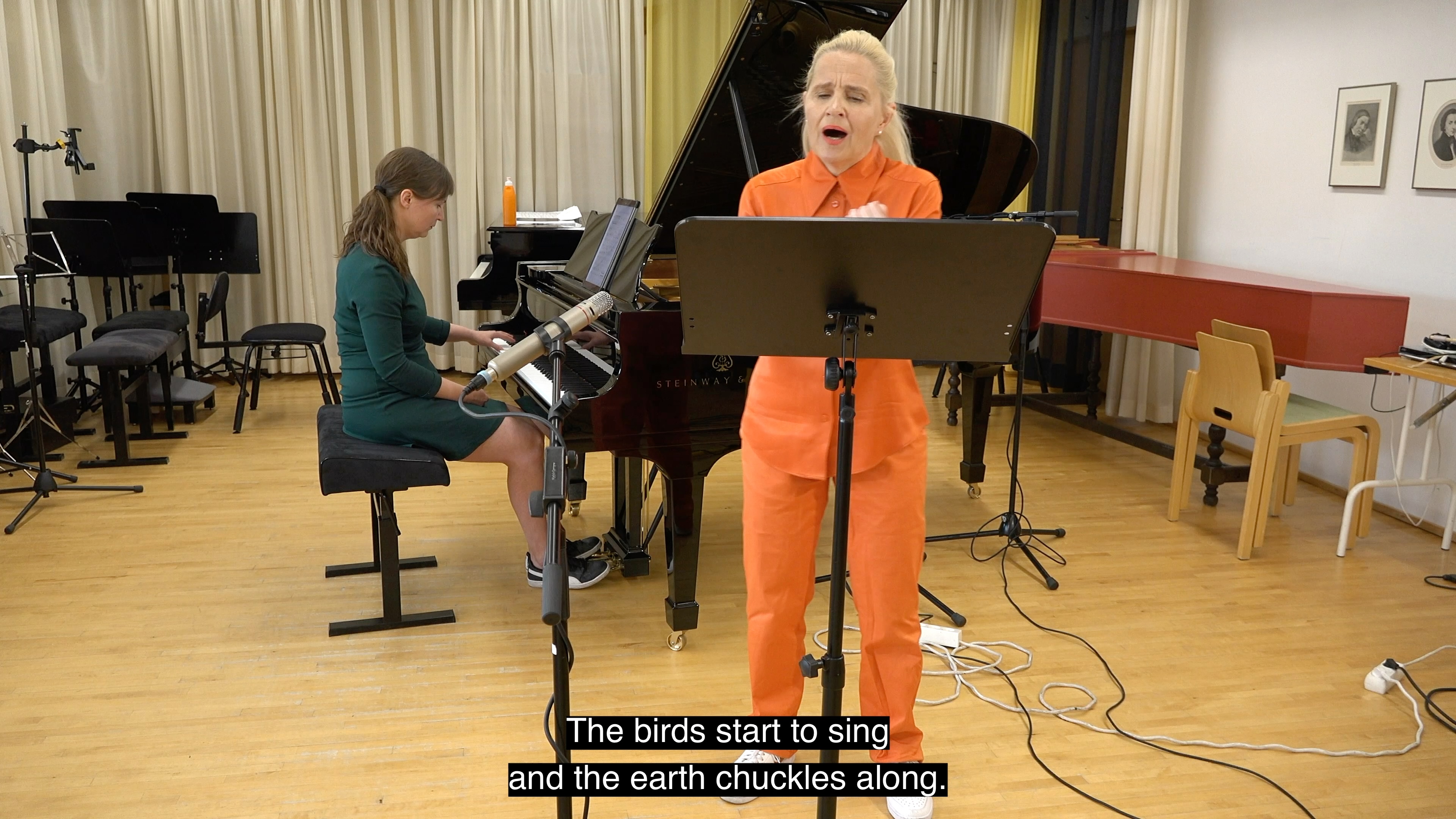
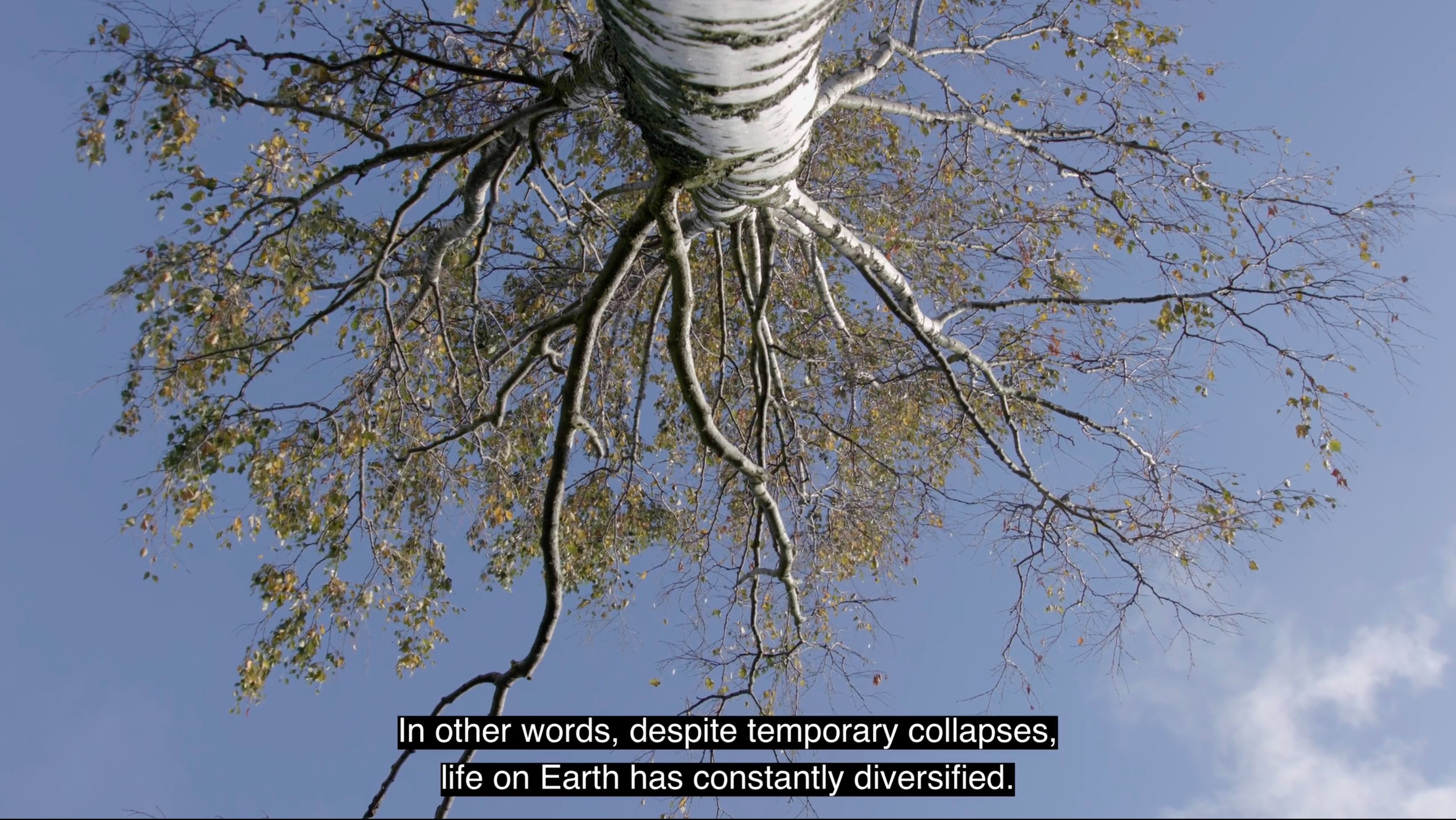
A few film still from the 16 short films.